
Tree Removal vs. Tree Preservation: Making the Right Choice
Do you really need to remove that tree, or can you save it?
Homeowners in Canada frequently face a difficult dilemma: determining whether a beloved tree requires total removal or if preservation strategies can restore its health. This decision impacts your property value, your safety, and the local ecosystem. Making the wrong choice can lead to unnecessary costs or dangerous accidents during winter storms.
This guide breaks down the critical factors you must evaluate. We look at the structural signs of failure, the specialized tools arborists use to diagnose health, and the environmental trade-offs of removal versus preservation.
Quick Summary: The Decision Checklist
If you need a fast answer, check these primary indicators. These points summarize the key differences between a tree you should save and one you must remove.
* Candidate for Preservation:
* The tree possesses less than 25% canopy damage.
* The trunk sounds solid when tapped (indicating no internal decay).
* The tree has sentimental or historical value.
* The species is native and supports local biodiversity (like a Sugar Maple or White Oak).
* Corrective pruning or cabling can mitigate structural risks.
* Candidate for Removal:
* More than 50% of the tree is damaged or dead.
* Mushrooms or conks are growing at the base of the trunk.
* The tree leans significantly toward a target (house, car, power line).
* It is an invasive species (such as Norway Maple or Buckthorn).
* The root system has suffered severance from recent construction.
—
Understanding the Core Assessment: Visual Tree Assessment (VTA)
Arborists use a standard method called Visual Tree Assessment (VTA) to determine the structural integrity of a tree. As a homeowner, you can perform a basic version of this to understand what you are dealing with before calling a professional.
1. The Root Collar Inspection
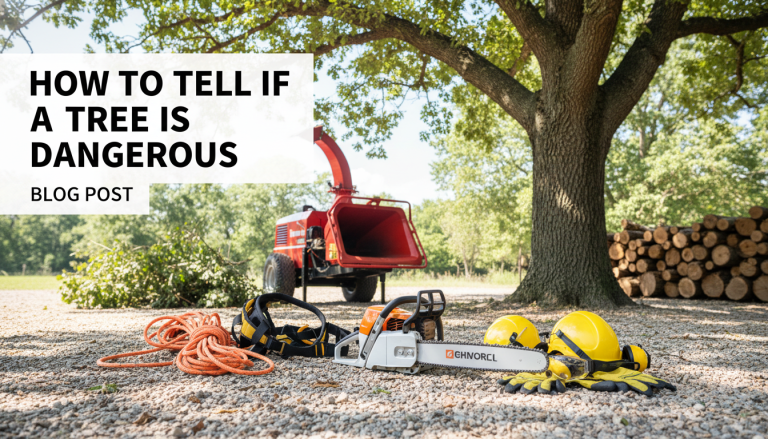
Start at the bottom. The root collar is the area where the trunk flares out into the soil. You want to see a visible flare. If the tree looks like a telephone pole going straight into the ground, it may suffer from girdling roots which strangle the tree beneath the soil. Look for fungus here. The presence of mushrooms on the root flares or lower trunk usually indicates internal rot. This is a strong sign that removal might be the safer option.
2. The Trunk Scan
Look for vertical cracks. A crack on opposite sides of the trunk suggests the tree is splitting in half. This is an emergency removal situation. However, a single crack that has formed “wound wood” (a callous roll along the edge) indicates the tree is sealing itself and preserving its own structure. In these cases, preservation is often viable.
3. Canopy Evaluation
Look up. Are there dead branches hanging loosely? We call these “widow makers” for a grim reason. If the deadwood is concentrated in the lower canopy due to lack of sunlight, the tree is likely healthy. If the dead branches are at the very top (crown dieback), the tree is likely suffering from root issues or systemic disease. Top-down death often tips the scale toward removal.
Methods of Tree Preservation: Tools and Techniques
Preservation is often the preferred route for Canadian municipalities and eco-conscious homeowners. Mature trees significantly boost property value. When you choose preservation, you usually employ one of the following technical methods.
Cabling and Bracing
The Problem: You have a beautiful, large tree with co-dominant stems (two trunks growing from one point) that form a weak “V” shape. These are prone to splitting during heavy snow or wind.
The Solution: Arborists install high-strength steel cables or synthetic ropes high in the canopy. This limits the movement of the stems during storms. They may also insert threaded steel rods through the trunk union to prevent splitting. This hardware extends the life of the tree by decades and turns a hazardous situation into a manageable one.
Deep Root Fertilization and Aeration
The Problem: Urban soil is often compacted. Foot traffic and construction press the soil down, removing the oxygen pockets that roots need to survive. The tree slowly starves.
The Solution: Specialists use a tool called an Air Spade. This tool uses compressed air to blast apart soil without damaging roots. They then mix in organic compost and specialized fertilizers. This process, known as vertical mulching or radial trenching, reinvigorates the tree and encourages new growth.
Conservation Pruning
The Problem: The tree is heavy and catches too much wind, or it has diseased limbs.
The Solution: Rather than “topping” the tree (which ruins it), preservationists perform crown cleaning or thinning. They selectively remove dead, diseased, or crossing branches. This reduces wind resistance, allowing wind to pass *through* the tree rather than pushing against it. This significantly lowers the risk of the tree failing during a storm.
The Technical Side of Tree Removal
Sometimes preservation is impossible. A tree might be too far gone, or it poses an unacceptable risk to your foundation. Modern tree removal is a highly technical process that involves more than just a chainsaw.
Rigging and Dismantling
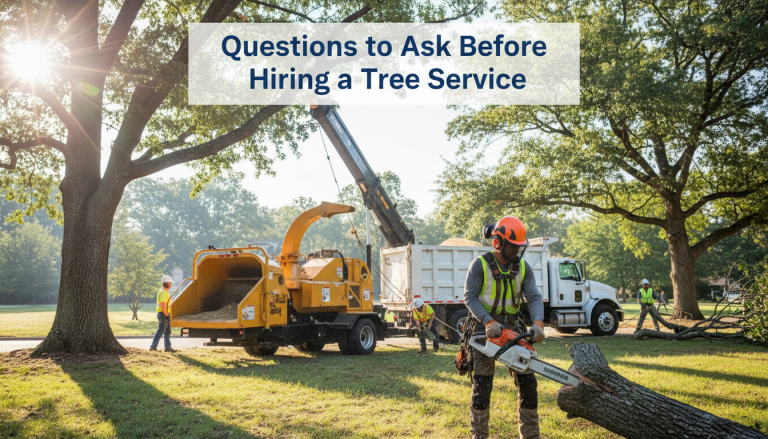
In tight urban spaces, you cannot simply fell a tree. Arborists use complex rigging systems. They install friction devices and blocks (pulleys) in the tree. The climber cuts a piece of wood, and the ground crew slowly lowers it using a rope. This ensures that heavy logs do not crash down onto your lawn, patio, or driveway. This method protects your property during the removal process.
Crane-Assisted Removal
For dangerous trees that are too unstable to climb, contractors utilize cranes. The operator lifts the climber into position. The climber attaches the tree section to the crane hook, makes the cut, and the crane lifts the entire piece up and over the house. This is often the safest and fastest method for removing large, hazardous trees.
Stump Grinding
Removal is not complete until the stump is gone. Stump grinders use a rotating cutting disk with carbide teeth to chew the wood into chips. You should ensure your contractor grinds the stump 6 to 12 inches below grade. This allows you to plant grass or a garden bed over the old site. Leaving a stump can attract carpenter ants or termites.
Environmental and Safety Implications
Your choice between removal and preservation extends beyond your property line. It affects the local environment and neighborhood safety.
The Case for Preservation: Environmental Impact
* Stormwater Management: A mature evergreen can intercept over 15,000 litres of water per year. This reduces runoff and prevents basement flooding in your neighborhood.
* Temperature Regulation: Shade from trees cools homes in the summer, reducing air conditioning costs. In winter, they act as windbreaks, lowering heating bills.
* Carbon Sequestration: Older trees store significantly more carbon than young saplings. Keeping a large tree alive is one of the best things you can do for your local carbon footprint.
The Case for Removal: Safety and Liability
* Risk Mitigation: As a property owner, you hold liability if a known hazard tree damages a neighbor’s property. If an arborist identifies a tree as “high risk,” removal eliminates that liability.
* Disease Control: Trees with contagious diseases, such as Dutch Elm Disease or Oak Wilt, act as reservoirs. Removing these trees promptly prevents the infection from spreading to every other tree in the neighborhood.
* Invasive Species Management: Removing invasive species clears space for native flora to thrive. This restores the natural balance of your local ecosystem.
Cost Analysis: Investing Now vs. Paying Later
Homeowners often hesitate at the price of tree work. However, understanding the long-term economics helps clarify the decision.
Tree Removal Costs:
Removal is generally a high, one-time expense. The price depends on height, diameter, accessibility, and complexity. While expensive upfront, it eliminates future maintenance costs for that specific tree. However, you also lose the value the tree added to your property appraisal.
Tree Preservation Costs:
Preservation is an ongoing investment. You may pay for pruning every 3 to 5 years and cabling inspections annually. However, this cost is usually lower than a full removal. Furthermore, healthy mature trees can increase property value by up to 15%. Preservation effectively acts as asset management.
Maintenance and Practical Tips for Canadian Homeowners
Whether you choose to remove a hazard or preserve a gem, proactive maintenance is key. Follow these tips to manage your trees effectively.
1. Monitor After Storms: Canada sees heavy ice and wind. Always inspect your trees after a major weather event. Look for hanging branches or new cracks.
2. Mulch Correctly: Create a donut shape of mulch around the base of your preserved trees. Keep the mulch pulled back from the trunk. This retains moisture and protects roots from mower damage.
3. Check Your Local Bylaws: Most Canadian cities have strict tree protection bylaws. You often need a permit to remove a tree with a diameter greater than 30cm. Removing a tree without a permit can result in fines exceeding $10,000. Always verify this before starting work.
4. Avoid Topping: Never allow a contractor to cut the top off your tree. This creates weak regrowth and leads to future hazards. Always insist on proper pruning standards.
Conclusion: Making the Final Call
The choice between tree removal and preservation requires balancing safety, aesthetics, and biology. You must weigh the structural integrity of the tree against the risk it poses to your home. While you can spot the obvious signs of decay, only a certified professional can see what is happening inside the wood.
If you are unsure about the stability of a tree on your property, do not wait for the next storm to test it. Get a professional opinion to protect your home and your landscape.
Ready to assess your trees?
[Browse our directory to find a certified tree service contractor near you today.]