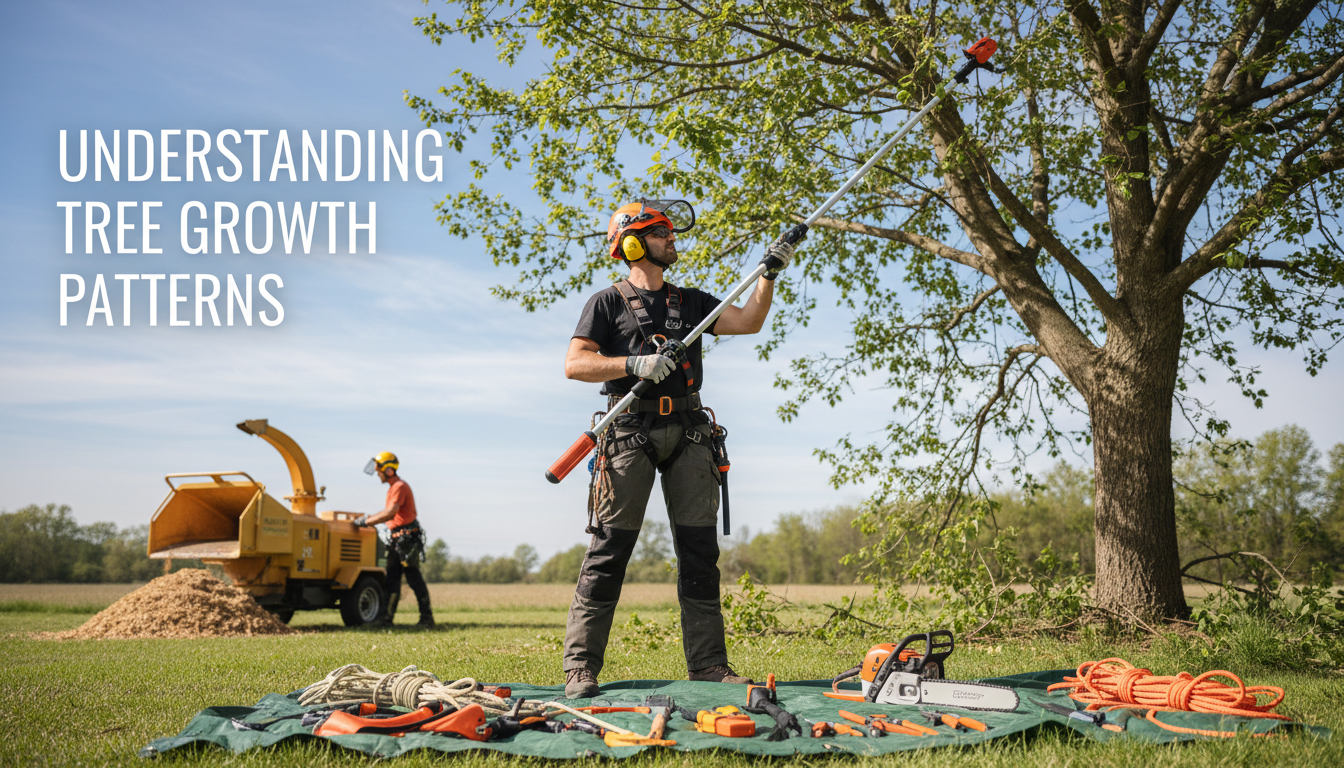
Understanding Tree Growth Patterns
Understanding Tree Growth Patterns: A 2025 Guide for Canadian Homeowners
Do you ever wonder why the spruce in your backyard towers straight up like an arrow while the old oak in the front yard spreads its branches wide enough to shade the entire driveway? Understanding how trees grow involves more than just planting a seed and waiting for rain. It requires a look into the biological engines that drive height, girth, and structural integrity.
Whether you manage a sprawling rural property in British Columbia or a compact suburban lot in Ontario, grasping the basics of tree biology helps you make better landscaping decisions. This guide explores the mechanisms behind tree growth patterns so you can better care for your arboreal investments.
Quick Summary: Key Takeaways on Tree Growth
If you want the fast facts before diving deep, here is what you need to know about how trees develop:
* Meristems Drive Growth: Trees only grow from specific points called meristems. They do not stretch like a rubber band.
* Two Directions: Primary growth adds height and root length. Secondary growth adds thickness to the trunk and branches.
* Root Reality: Roots typically extend sideways 2 to 3 times the width of the canopy but rarely go deeper than 60 centimetres in Canadian soils.
* Apical Dominance: The main central leader controls the shape of the tree by suppressing lower branches using hormones.
* Reaction Wood: Trees actively grow special wood to correct leaning trunks caused by wind or gravity.
The Biological Engine: How Trees Actually Grow
Many people believe trees grow by stretching their trunks upward. If you hammer a nail into a tree trunk at eye level today, it will remain at eye level twenty years from now. The tree grows around it, but it does not push the nail up. This happens because of the unique way trees generate new cells.
The Meristematic Zones
Trees grow solely from zones of dividing cells known as meristems. These are the construction sites of the tree. Understanding where these are helps you understand how pruning cuts affect future growth.
1. Apical Meristems (Height and Reach)
Located at the very tips of shoots and roots, apical meristems represent the primary growth engine. These cells divide rapidly to extend the length of the branch or the depth of the root. In the canopy, these tips produce leaves and buds. Underground, they push roots through the soil in search of water.
2. Lateral Meristems (Girth and Strength)
To support a taller structure, the tree must thicken. This occurs in the lateral meristems, specifically the vascular cambium. This thin layer of cells sits just beneath the bark. It produces xylem (wood) toward the inside and phloem (inner bark) toward the outside. In Canada, where seasons change drastically, this cycle creates the distinct annual rings you see on a stump.
Growth Habits: Excurrent vs. Decurrent Patterns
When you look at a silhouette against the sunset, you usually see one of two distinct shapes. Genetics determine these patterns, though the environment plays a supporting role.
Excurrent Growth (The Cone Shape)
Think of a classic Christmas tree, such as a Balsam Fir or White Spruce. These trees exhibit strong apical dominance. The central leader (the main trunk) outgrows the side branches significantly. The terminal bud releases hormones (auxins) that travel down the stem and chemically suppress the growth of lateral buds.
This pattern serves a vital purpose in Canadian winters. The conical shape sheds heavy snow loads efficiently, preventing branch failure. If you cut the top off an excurrent tree (a practice called topping), you destroy this hormonal control mechanism, often resulting in a messy, weak cluster of new shoots fighting for dominance.
Decurrent Growth (The Spreading Shape)
Deciduous trees like Maples, Oaks, and Elms often start with a central leader but eventually lose that dominance. As the tree matures, the lateral branches grow nearly as fast as the central stem. This results in a broad, rounded crown.
Decurrent trees maximize light absorption during the short growing season. By spreading wide, they cast a larger net to capture sunlight for photosynthesis. However, this structure makes them more susceptible to ice storm damage, requiring careful structural pruning to prevent splitting.
The Root System: Myths vs. Reality
Homeowners frequently misunderstand root growth. A common myth suggests the root system acts as a mirror image of the canopy, plunging deep into the earth. In reality, tree roots behave quite differently, especially in Canada’s geological landscape.
The Pancake Model
Visualizing a wine glass on a dinner plate provides a more accurate mental image. The tree is the glass, and the roots are the plate. Roots spread horizontally, often extending two to three times beyond the dripline (the edge of the canopy).
Depth Limitations
Tree roots require oxygen to function. In dense clay soils or compacted urban lots, oxygen levels drop significantly the deeper you go. Consequently, 80 to 90 percent of a tree’s root system lives in the top 60 centimetres of soil. This shallow nature explains why construction equipment driving over the root zone causes so much damage. It compacts the soil, suffocating the feeder roots near the surface.
Environmental Influences on Growth
Genetics provide the blueprint, but the environment serves as the contractor. External forces dictate how well the tree follows its genetic plan.
Phototropism (Seeking Light)
Trees possess an innate ability to sense light direction. Hormones redistribute within the stem to elongate the shaded side of a branch, pushing the foliage toward the sun. In a dense forest or a crowded neighbourhood, trees often grow tall and thin with few lower branches as they race toward the light. If you plant a sun-loving tree in the shade, it will develop a sparse, leggy growth pattern as it desperately stretches for energy.
Thigmomorphogenesis (Response to Touch/Wind)
Trees respond to physical stress. A tree exposed to constant wind develops a shorter, thicker trunk and a stronger root system compared to a tree grown in a protected nursery. The mechanical stress stimulates the cambium to produce thicker wood cells (reaction wood) to reinforce the structure. This is why staking a young tree too tightly for too long actually weakens it; the tree never senses the wind, so it never builds the muscle to stand on its own.
The Canadian Climate Factor
Our northern climate imposes a strict schedule on growth patterns. Trees here must harden off before winter. As days shorten in late summer, trees stop vegetative growth and focus on lignification (hardening of cell walls) and storing carbohydrates in the roots.
Late-season nitrogen fertilization disrupts this process. It signals the tree to push out soft, new green growth when it should be preparing for dormancy. When the first hard frost hits in October or November, that new growth dies instantly, stressing the tree.
Reaction Wood: How Trees Correct Posture
Nature rarely offers a perfectly flat surface. Trees growing on slopes or correcting a lean from a storm use a fascination mechanism called reaction wood. This highlights the dynamic nature of tree growth patterns.
Compression Wood (Conifers)
Softwoods like Pine and Spruce push themselves upright. They form reaction wood on the lower side of a leaning stem. This wood contains more lignin and expands, effectively jacking the tree back toward a vertical position.
Tension Wood (Broadleafs)
Hardwoods like Maple and Ash pull themselves upright. They form reaction wood on the upper side of the lean. These cellulose-rich fibers contract, acting like a muscle to hoist the trunk straight.
Understanding this helps you evaluate risk. A tree with a corrected lean (a sweep in the trunk) is often stronger than a tree that has recently tilted and hasn’t yet formed reaction wood.
Practical Maintenance Tips Based on Growth Patterns
Now that you understand the biology, you can apply this knowledge to your landscape maintenance routine.
1. Pruning Respects the Collar
Because trees grow in layers over time, the branch connects to the trunk at a specific zone called the branch collar. Inside this collar, the tree’s chemical defense system resides. When you remove a limb, you must cut just outside this swollen collar. This allows the trunk tissue to grow over and seal the wound. Cutting flush to the trunk destroys the collar and invites decay into the main stem.
2. Mulch mimics the Forest Floor
Since feeder roots sit near the surface, they resent competition from turfgrass. Grass creates a thick mat that intercepts water and nutrients. Creating a mulch ring around the base of your tree eliminates grass competition, retains moisture, and protects the shallow roots from temperature extremes. Keep the mulch 5 to 10 centimetres deep, but ensure it does not touch the trunk directly.
3. Watering for Root Expansion
Shallow, frequent watering encourages roots to stay right at the surface where they are vulnerable to drought. Deep, infrequent watering encourages roots to explore the full depth of the available topsoil. For established trees, a slow soak that penetrates 30 centimetres deep is far superior to a daily sprinkle.
Why Professional Assessment Matters
Tree growth patterns tell a story. A certified arborist looks at a tree and sees its history. They see where the central leader failed five years ago. They see where root compaction stunted growth on the south side. They identify the reaction wood that indicates a structural defect.
Interpreting these signs correctly ensures the safety of your home and the health of your landscape. Misinterpreting them often leads to unnecessary removal or property damage during storms.
If you notice strange growth patterns, dead tips, or excessive leaning, you need an expert eye. A professional can determine if the tree is correcting itself or if it poses a hazard to your family.
Do not guess when it comes to thousands of pounds of timber hovering over your roof. We can help you find a qualified local expert to assess your trees.
[Browse our directory to find a tree service contractor near you.]