How Far Should Trees Be Planted from Your House?
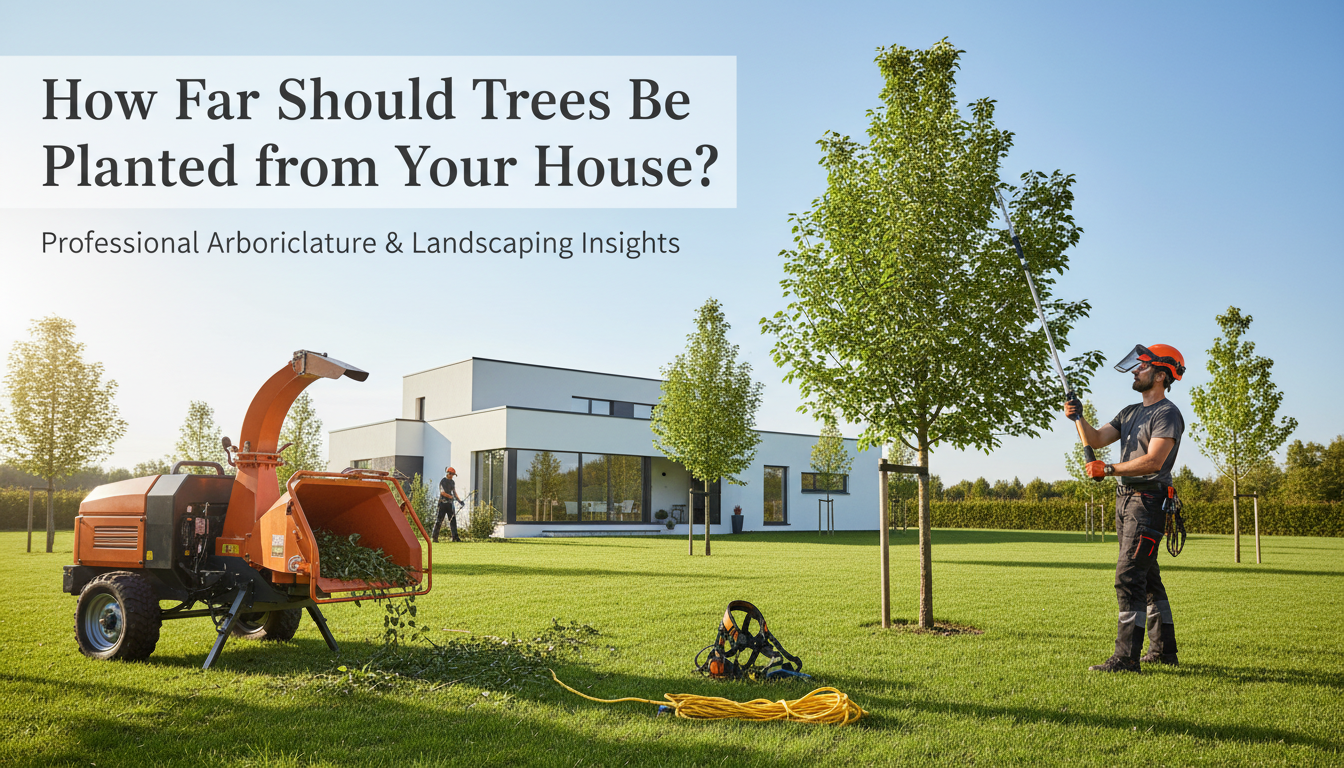
How Far Should Trees Be Planted from Your House?
Do you look at the sapling in your hand and wonder if it will eventually threaten your foundation? You are asking the right question. Planting a tree is an investment in your property’s future, but placing it incorrectly can lead to expensive repairs, plumbing disasters, and structural instability. Finding the balance between curb appeal and structural safety is critical for every Canadian homeowner.
This guide breaks down exactly how far you need to keep trees from your home based on their mature size, root aggression, and the specific challenges of the Canadian climate.
Quick Summary: Safe Planting Distances
For those looking for immediate answers, use these general guidelines based on the height of the tree at maturity. Always measure from the center of the tree trunk to the nearest wall of your home.
* Small Trees (Under 10 metres tall): Plant at least 3 to 4.5 metres (10-15 feet) from the wall.
* Medium Trees (10 to 20 metres tall): Plant at least 6 metres (20 feet) from the wall.
* Large Trees (Over 20 metres tall): Plant at least 9 to 15 metres (30-50 feet) from the wall.
* Corner Planting: To preserve sightlines and foundation safety, plant trees at a 45-degree angle from the corner of the house.
The Science of Tree Spacing: Why Distance Matters
Many homeowners assume the visible branches pose the biggest threat. While falling limbs are a concern, the silent damage often occurs underground. Understanding the mechanics of tree growth helps you make better landscaping decisions.
1. Root Intrusion and Soil Hydrology
Tree roots extend far beyond the canopy of the tree (the drip line). In search of moisture, roots can spread two to three times the height of the tree. Contrary to popular belief, roots rarely “punch” through solid concrete. Instead, they operate opportunistically. They find microscopic cracks in your foundation or drainage pipes and expand them over time.
More commonly, trees cause foundation issues through subsidence. Large trees require massive amounts of water. In clay-heavy soils found in many parts of Ontario and Quebec, trees suck the moisture out of the ground, causing the soil to shrink and pull away from the foundation. This loss of support causes the house to settle unevenly, leading to cracked walls and sticking doors.
2. Canopy Overhang and Physical Damage
In Canada, we face specific weather challenges. Ice storms and heavy snow loads weigh down branches. If a tree sits too close to your home, a heavy snowfall can bend a branch until it scrapes your shingles, stripping away the protective granules. In worse scenarios, the branch snaps and punctures the roof.
Furthermore, overhanging branches drop leaves and needles directly into your gutters. This debris creates dams that trap water. When that water freezes in winter, it causes ice dams that force water under your shingles and into your attic.
3. Airflow and Siding Preservation
Your home needs to breathe. Dense foliage pressed against siding prevents the sun from drying out the exterior walls after rain or snow. This constant moisture promotes the growth of mold, mildew, and algae on vinyl or wood siding. Over time, this accelerates rot and degrades the cladding materials.
Detailed Spacing Guide by Tree Size
Not all trees behave the same way. You must plan for the tree’s size 20 years from now, not its size today.
Small Trees (Zone 1)
Mature Height: Up to 10 metres (30 feet)
Safe Distance: 3 to 4.5 metres (10-15 feet)
These ornamental trees serve as accents. You can plant them closer to the home, but you must ensure they do not block windows or rub against the eaves. These trees usually have less aggressive root systems.
Best Options for Canada:
* Serviceberry (Amelanchier): Native, hardy, and offers beautiful seasonal colour.
* Crabapple (Malus): Provides spring flowers, though fruit cleanup is required.
* Japanese Maple (Acer palmatum): Excellent for sheltered areas in warmer zones (like BC or Southern Ontario).
Medium Trees (Zone 2)
Mature Height: 10 to 20 metres (30-70 feet)
Safe Distance: 6 to 10 metres (20-30 feet)
Medium trees provide shade and privacy. However, their root systems are substantial enough to affect utility lines and weeping tiles if placed too close.
Best Options for Canada:
* Mountain Ash (Sorbus): distinct berries and moderate growth.
* White Birch (Betula papyrifera): visually striking bark, but keep away from weeping tiles as they seek water aggressively.
* Fruit Trees (Apple, Pear, Cherry): These require maintenance and should be kept far enough away to prevent dropped fruit from attracting pests to your foundation.
Large Trees (Zone 3)
Mature Height: Over 20 metres (70+ feet)
Safe Distance: 15 metres (50 feet) or more
These are the giants of the forest. While majestic, they pose the highest risk to structures due to massive root systems and the potential for catastrophic limb failure during storms.
Best Options for Canada:
* Sugar Maple (Acer saccharum): The iconic Canadian tree. Requires significant space.
* Oaks (Quercus): Deep taproots make them stable, but their lateral spread is immense.
* Spruce and Pine: Conifers offer year-round windbreaks but catch significant wind. Keep them well away from the house to prevent windthrow damage.
High-Risk Trees: What to Avoid Near Foundations
Some trees possess such aggressive root systems or brittle wood that you should never plant them near a house, regardless of the general rules. If you have these species within 15 metres of your home, you should consult an arborist.
1. Willows (Salix): The thirstiest tree. Its roots will travel incredible distances to find your sewer line or septic bed. Avoid planting these near any structure.
2. Poplars (Populus): Fast-growing but with extensive, shallow, and invasive roots. They are also prone to rotting from the inside out, making them a toppling hazard.
3. Silver Maple (Acer saccharinum): A popular fast-growing shade tree, but the wood is brittle and breaks easily in wind and ice. The shallow roots also heave sidewalks and driveways.
4. American Elm (Ulmus americana): While beautiful, their roots are notorious for interfering with drains and foundations.
Environmental and Safety Benefits of Proper Spacing
Spacing your trees correctly does more than save your foundation. It actively contributes to a safer, more energy-efficient home environment.
FireSmart Principles
For Canadians living in areas prone to wildfires (particularly in Western Canada and Northern Ontario), proper spacing is a matter of safety. The FireSmart Canada guidelines recommend a non-combustible zone (Zone 1A) within 1.5 metres of the house. You should plant no trees in this zone.
From 1.5 to 10 metres (Zone 1), you should space trees specifically to prevent fire from jumping from crown to crown. Deciduous trees (leafy) are preferred over coniferous trees (needles) in this zone because they are less flammable.
Energy Efficiency
A deciduous tree planted on the south or west side of your home (at the proper distance) blocks summer sun, reducing cooling costs by up to 30%. In the winter, the leaves fall, allowing the sun to warm your home. If the tree is too close, however, it creates permanent shade that can make the house feel damp and cold, increasing heating bills.
Maintenance and Mitigation for Existing Trees
Perhaps you did not plant the tree. Maybe you bought a house where a massive Oak sits five metres from the back door. You do not necessarily have to cut it down, but you must take proactive steps to manage the risk.
1. Root Pruning and Barriers
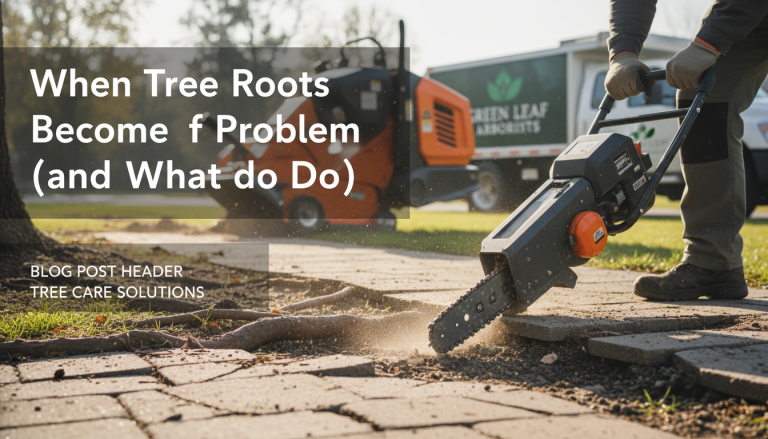
If roots are threatening a patio or driveway, you might consider root pruning. Warning: You must hire a professional for this. Cutting major roots compromises the tree’s stability. If you cut the structural roots on the side facing the house, a strong wind could blow the tree onto your roof. Experts can install mechanical root barriers that deflect roots deeper into the soil, away from your foundation, without harming the tree.
2. Crown Cleaning and reduction
Have an arborist perform regular “crown cleaning.” They remove dead, dying, or diseased wood that could fall on your roof. They can also perform a “reduction” prune to shorten branches extending over the roofline, reducing the leverage and weight on the trunk.
3. Gutter Guards and Drainage
If you have a tree nearby, install high-quality gutter guards. You must also ensure your downspouts extend at least 2 to 3 metres away from the foundation. This discourages roots from congregating near the foundation wall, as there will be less water there to attract them.
Conclusion: Plan Before You Plant
The best time to think about tree distance is before you put the shovel in the ground. A tree is a permanent addition to your landscape. By respecting the power of root systems and the potential size of the canopy, you ensure your home remains safe and your tree remains healthy.
Remember these three steps:
1. Identify the tree species.
2. Confirm the maximum mature height.
3. Measure the distance from your foundation, accounting for Zone 1, 2, or 3 guidelines.
If you are unsure about an existing tree’s safety or need help selecting the right species for your specific yard size, do not guess. Structural repairs cost thousands; a consultation costs a fraction of that.
Is a tree on your property growing a little too close for comfort? Connect with a qualified local expert today.
[Browse our directory to find a top-rated tree service contractor near you.]