Winter Tree Care: Protecting Trees from Cold Damage
Winter Tree Care Guide 2025: Protecting Canadian Trees from Cold Damage
Will your trees withstand the weight of the next ice storm or the drying winds of a harsh Canadian winter?
Many homeowners assume trees simply go to sleep when the temperature drops. While they do enter dormancy, they remain vulnerable to extreme weather, fluctuating temperatures, and heavy snow loads. A lack of preparation often leads to expensive removals or permanent structural damage come spring. Taking proactive steps now ensures your landscape retains its value and beauty for the coming year.
This guide breaks down exactly how to protect your arboreal investments from the unique challenges of our northern climate. We will cover technical methods, hydration strategies, and physical protection techniques.
Quick Summary: Essential Winter Protection Strategies
If you need immediate answers, here are the core pillars of winter tree care:
* Deep Hydration: Water trees thoroughly until the ground freezes to prevent winter desiccation.
* Insulating Mulch: Apply a 5-10 cm layer of wood chips around the base to regulate soil temperature and retain moisture.
* Trunk Guards: Install white plastic guards or wrap trunks with burlap to prevent sunscald and rodent damage.
* Structural Pruning: Remove dead or weak limbs before snow loads cause them to snap.
* Salt Barriers: Erect physical barriers near roadways to block saline spray from passing vehicles.
Understanding the Threat: Why Trees Suffer in Winter
To protect your trees effectively, you must understand the specific mechanics of cold damage. In Canada, we face three primary enemies: temperature fluctuations, desiccation, and physical weight.
Sunscald and Frost Cracks
Sunscald, often called “southwest injury,” occurs on sunny winter days. The sun warms the bark on the south or southwest side of the tree, causing dormant cells to wake up and become active. When the sun sets or clouds roll in, temperatures plummet rapidly. These active cells freeze and rupture, killing the tissue. This results in unsightly vertical cracks and long-term health issues for thin-barked species like Maples, Birches, and fruit trees.
Winter Desiccation (Winter Burn)
Trees lose water even in winter. Conifers are particularly susceptible because they retain their needles. Cold winds strip moisture from the foliage faster than the frozen root system can replace it. The result is browning needles and dieback, commonly known as winter burn. Once the ground freezes solid, the tree essentially faces a drought until the spring thaw.
Root Injury and Frost Heaving
Soil expands and contracts during freeze-thaw cycles. This movement can push the root balls of young or shallow-rooted trees out of the ground, exposing tender roots to freezing air. This mechanical action, known as frost heaving, snaps small feeder roots and compromises the tree’s stability.
Core Protection Techniques: Tools and Methods
Implementation of the right physical barriers and maintenance routines significantly reduces these risks. Here is how you apply professional-grade care to your property.
1. Strategic Mulching
Mulch acts as a thermal blanket for the root zone. It does not generate heat, but it moderates the speed at which the soil freezes and thaws. This moderation prevents the violent expansion and contraction that causes frost heaving.
Technical Application:
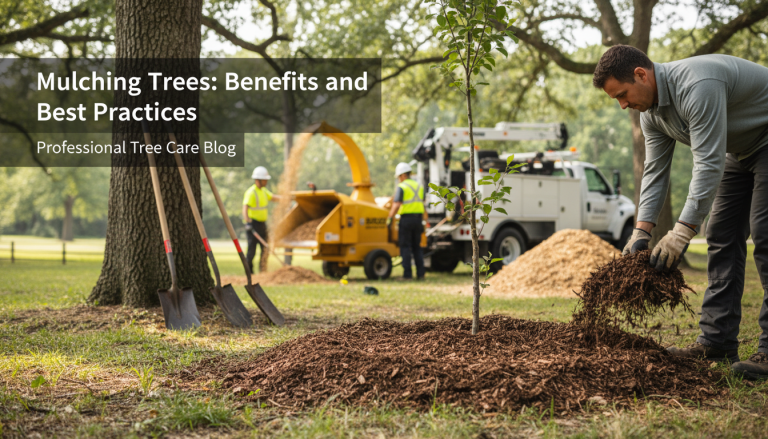
* Material: Use coarse-textured organic mulch, such as wood chips or shredded bark.
* Depth: Apply a layer 5 to 10 centimetres deep.
* Radius: Extend the mulch ring as far out as the drip line (the outer edge of the branches) if possible.
* The Rule: Do not pile mulch against the trunk. Create a “donut” shape, not a “volcano.” Piling mulch against the bark encourages rot and creates a shelter for rodents that will chew on the tree during winter.
2. Wrapping and Guarding Trunks
Physical barriers serve two purposes: they reflect sunlight to keep the bark cool (preventing sunscald) and they stop pests from gnawing on the bark for sustenance.
For Sunscald:
Use white plastic tree guards or light-coloured tree wrap. The light colour reflects solar radiation, keeping the bark temperature close to the air temperature. Apply these guards in late autumn and remove them in early spring after the last frost. Leaving them on year-round traps moisture and fosters disease.
For Wind Protection:
Construct a burlap screen for sensitive evergreens (like Cedars or Yews) exposed to prevailing winds or road salt. Drive stakes into the ground roughly 15 centimetres from the foliage and wrap burlap around the stakes. Do not wrap the burlap directly onto the plant tight like a mummy, as this encourages fungal growth. The goal is to break the wind, not seal the plant.
3. Hydration Management
Water serves as a buffer against cold. Well-hydrated plant cells withstand freezing temperatures better than dehydrated ones. A dry fall often leads to a disastrous spring for evergreens.
Action Plan:
* Monitor rainfall in October and November.
* If natural precipitation is low, water your trees deeply once a week.
* Use a soaker hose to ensure water penetrates roughly 20 to 30 centimetres into the soil.
* Stop watering only when the ground freezes hard and no longer absorbs liquid.
4. Managing Snow and Ice Loads
Heavy wet snow and ice storms pose immediate structural threats. The weight creates tremendous torque on branches, leading to catastrophic failure.
Proper Removal:
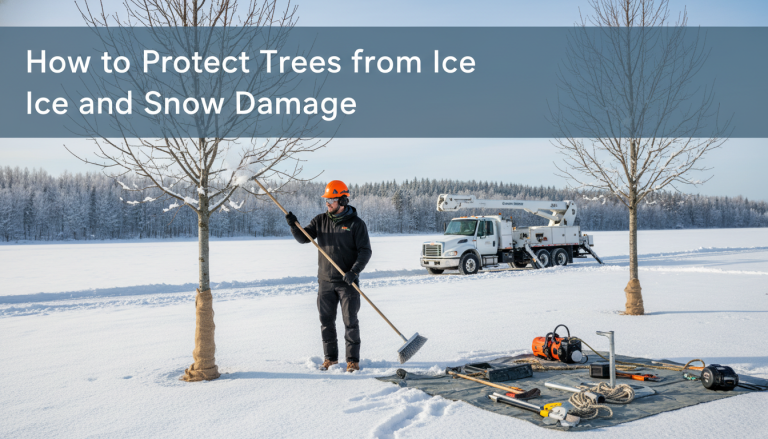
* Snow: Gently brush heavy snow off accessible branches using a broom or a pole. Sweep upward to lift the weight rather than pushing down.
* Ice: Never try to break ice off a branch. Ice adheres tightly to the bark. Striking the ice will likely snap the branch or tear the bark. Let the ice melt naturally. If the weight is critically bending a limb, prop it up with a wooden board until the thaw occurs.
5. Combatting Road Salt
In Canada, road salt (sodium chloride) is a silent killer. Salt spray from passing cars desiccates buds and needles. Salt accumulation in the soil prevents roots from absorbing water and nutrients, effectively poisoning the tree.
Defense Tactics:
* Physical Barriers: Install burlap fencing between your trees and the roadway or sidewalk.
* Soil Amendments: If you suspect high salt levels, apply gypsum (calcium sulfate) to the soil in late fall or early spring. The calcium displaces sodium in the soil structure, allowing it to leach away.
* Spring Flushing: As soon as the ground thaws, water salt-exposed areas heavily to flush the sodium deeper into the soil profile, away from the root zone.
Environmental and Safety Benefits
Investing time in winter tree care yields returns beyond the health of the individual plant. These efforts contribute to a safer property and a healthier local ecosystem.
Public and Property Safety
Winter storms expose structural weaknesses. A tree with decayed limbs or a compromised root system becomes a liability during high winds or heavy snowfall. Proactive winter care, specifically inspection and structural pruning, significantly reduces the risk of branches falling on roofs, vehicles, or power lines.
Carbon Sequestration Continuity
Trees stressed by winter damage expend immense energy repairing themselves in spring. This diverts energy from growth and carbon capture. Healthy, well-protected trees resume vigorous growth immediately upon breaking dormancy, maximizing their environmental benefits.
Wildlife Habitat Preservation
Your landscape provides critical shelter for birds and small mammals during the cold months. Conifers with intact foliage offer thermal cover, while healthy deciduous trees provide stable roosting spots. Preventing winter damage ensures these habitats remain viable for local wildlife.
Maintenance and Practical Tips Checklist
Execute this checklist to ensure complete coverage before winter sets in fully.
1. Inspect for Structure: Look for V-shaped unions (weak crotches) or deadwood. These are failure points under snow load.
2. Clean the Area: Rake up fallen leaves around the base if they show signs of fungal disease (like tar spot on maples) to prevent reinfection next year.
3. Check Mulch Levels: Top up your mulch ring to the recommended depth.
4. Install Rodent Guards: Place wire mesh or plastic guards around the base of fruit trees and young saplings to deter rabbits and voles.
5. Prune Dormant Trees: Late winter (February or March) is the ideal time to prune most deciduous trees. The lack of leaves allows you to see the architecture clearly, and the wounds heal rapidly once growth resumes in spring.
When to Call a Professional
While homeowners can handle mulching and wrapping, some tasks require specialized equipment and expertise. High-canopy pruning, cabling weak limbs, and assessing structural integrity after an ice storm are dangerous tasks.
Arborists possess the training to identify hazards that an untrained eye might miss. They use climbing gear and lifts to access upper branches safely, ensuring no damage occurs to your home or the tree itself.
If you have large trees overhanging your home or suspect your trees need structural reinforcement for the winter, do not rely on guesswork. Secure your property by consulting a certified expert.
Ready to prepare your property for the season? [Browse our directory to find a qualified tree service contractor near you](https://example.com/tree-service-directory) and ensure your trees survive the winter in peak condition.