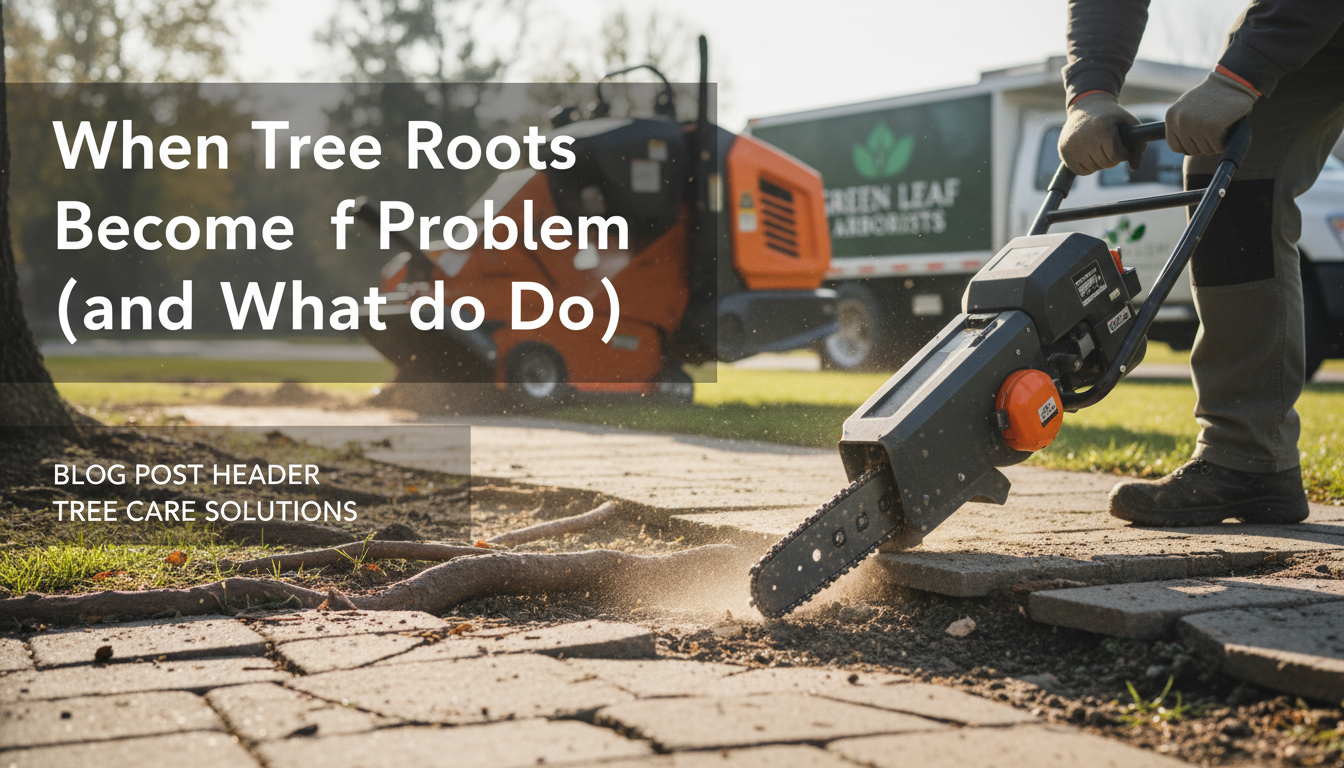
When Tree Roots Become a Problem (and What to Do)
Do You Have a Hidden Invader Under Your Lawn?
Have you noticed unexpected cracks in your driveway, a sidewalk lifting for no apparent reason, or drains that constantly clog despite your best plunging efforts? You might be dealing with an issue that lies beneath the surface. Tree roots are vital for the health of your landscape, but they become a significant liability when they encroach on your home’s infrastructure. In Canada, where freeze-thaw cycles already stress our foundations and driveways, aggressive root systems can turn minor issues into expensive repairs.
Ignoring the signs usually leads to higher costs down the road. This guide breaks down exactly why roots behave this way, how to identify the damage early, and the specific steps you must take to protect your property in 2025.
Quick Summary: Solving Root Problems Fast
If you need answers immediately, here is the snapshot of how to handle invasive roots:
* Diagnosis is Key: Differentiate between structural settling and root heave. Look for raised ridges in the soil or pavement.
* Plumbing Defense: For sewer backups, request a camera inspection before paying for snaking. Roots often re-enter pipes within weeks if not properly removed.
* Barriers work: Physical root barriers made of high-density plastic or metal can deflect roots away from foundations without killing the tree.
* Pruning Limits: Never cut more than 20% of a tree’s root system at once. Cutting major structural roots compromises the tree’s stability.
* Professional Help: Always consult a certified arborist before digging near the trunk. You need to identify the Critical Root Zone (CRZ).
***
Why Roots Misbehave (It’s Not Personal)
To solve the problem, you must understand the biology. Roots do not attack pipes or foundations out of malice. They seek resources. Roots look for two things: oxygen and water.
Sewer lines and foundation drainage systems create condensation and contain moisture. When a pipe develops a hairline crack (common in older clay pipes found in many Canadian heritage homes) or a joint seal fails, water vapor escapes into the surrounding soil. Tree roots detect this moisture gradient and grow toward the source. Once a microscopic root hair enters the crack, it feeds on the nutrient-rich water inside, grows rapidly, and expands. This expansion exerts tremendous force, eventually shattering the pipe or heaving the concrete above it.
Identifying the Damage: What to Look For
Early detection saves thousands of dollars. Monitor your property for these specific warning signs.
1. Structural Symptoms
Walk around the perimeter of your house. Look for vertical cracks in the foundation walls. While small settling cracks are normal, large cracks that widen at the top or bottom suggest heaving from below. Inside the home, stickiness in door frames or windows that suddenly refuse to close can indicate the house shifting due to root pressure on the footing.
2. Hardscape Heaving
Walk your driveway and walkways. Roots from large species like Silver Maples or Willow trees often grow near the surface. You will see concrete slabs lifted unevenly or asphalt cracking in a spiderweb pattern with a raised center. This creates a serious trip hazard and liability issue.
3. Plumbing Nightmares
This is the most common and messy issue. If your toilets gurgle when you run the washing machine, or if you experience frequent backups in the basement floor drain, roots have likely infiltrated the main sewer lateral. You might also notice sinkholes developing in the yard above the sewer line, indicating a pipe collapse has washed away the soil.
Tools and Methods for Root Management
When you confirm a root problem, you have several options ranging from mitigation to removal. Here are the professional methods experts use.
Mechanical Barriers
What they are: Rigid sheets of high-density polyethylene (HDPE) or corrosion-resistant metal.
How they work: Contractors dig a trench between the tree and the structure (foundation or sidewalk) and bury the material vertically. This creates an underground wall. When roots hit the barrier, they are forced to grow down or sideways, away from the protected zone.
Technical Spec: Barriers usually go 24 to 36 inches deep. Some include chemical inhibitors like trifluralin to prevent root tips from growing near the barrier surface.
Hydrovac Excavation and Air Spading
What they are: Advanced excavation tools that use pressurized water (Hydrovac) or compressed air (Air Spade) to remove soil.
How they work: Traditional shovels and backhoes tear roots and damage utility lines. Air spades blast the soil away from the roots without cutting the bark. This allows an arborist to inspect the root structure visually.
Benefits: This is the only way to safely prune roots. Once exposed, the arborist makes clean cuts on problematic roots without guessing what lies beneath. It minimizes shock to the tree.
Root Pruning
What it is: Selectively cutting roots to stop encroachment.
The Rules: You must measure the tree’s diameter at breast height (DBH). The Critical Root Zone usually extends 1 foot out for every inch of trunk diameter. Cutting large roots inside this zone destabilizes the tree, making it a toppling hazard during winter storms.
Tools used: Reciprocating saws with pruning blades, large loppers, or specialized root saws. Clean cuts are vital; a crushed root invites disease and rot that can kill the entire tree.
Chemical Treatments (Foaming)
What it is: Herbicidal foam pumped into sewer lines.
How it works: Products containing metam-sodium or dichlobenil kill the roots inside the pipe without harming the rest of the tree. The foam expands to fill the pipe, ensuring it touches roots growing at the top of the line.
Timing: This is a maintenance task, usually done annually or bi-annually.
Environmental and Safety Considerations
Before you grab a shovel or call an excavator, you must consider the broader impact of disturbing tree roots.
Soil Stability
Tree roots act as a net that holds soil in place. On sloped properties, removing large roots can lead to soil erosion or landslides during heavy rain or snowmelt. If your home sits on a grade, consult a geotechnical engineer or a specialized arborist before cutting major roots.
The “Wind-Throw” Risk
In Canada, high winds and ice storms are inevitable. The structural roots (the large, woody ones near the trunk) anchor the tree. If you sever these roots to save a sidewalk, you remove the tree’s ability to withstand wind loads. A tree falling on your roof causes far more damage than a cracked driveway. Always weigh the risk of root damage against the risk of tree failure.
Maintenance and Practical Tips for Homeowners
Prevention beats remediation every time. Follow these actionable tips to keep your property safe.
1. Plant the Right Tree in the Right Place
If you are planting new trees in 2025, check the mature size. Avoid planting aggressive species like Poplars, Willows, or Silver Maples within 15 meters of your foundation or sewer line. Opt for slow-growing, deep-rooting species like Oaks or specific ornamental maples designed for smaller spaces.
2. Water Deeply and Infrequently
Sprinkling your lawn lightly encourages roots to stay near the surface where the water is. Instead, water your trees deeply (using a soaking hose) for longer periods less frequently. This trains the roots to grow downward in search of moisture, reducing the risk of them lifting your pavement.
3. Schedule Regular Drain Cleaning
If you have mature trees near your sewer line, do not wait for a blockage. Schedule a hydro-jetting service every 18 to 24 months. High-pressure water blasts away small fibrous roots before they grow thick enough to crack the pipe.
4. Call Before You Dig
In Canada, hitting a utility line is dangerous and costly. Whether you are installing a root barrier or digging a test hole, always contact your local utility notification service (like Ontario One Call or similar provincial bodies) to mark underground lines.
When to Call a Professional
DIY root removal is risky. You risk killing the tree, injuring yourself, or damaging utility lines. If the root is more than 2 inches in diameter, or if the tree is within 10 feet of your home, you need an expert.
A professional arborist can assess the health of the tree and determine if root pruning is safe. A professional tree service contractor has the heavy machinery (like stump grinders and hydrovacs) to handle the job efficiently and safely.
Don’t let hidden roots undermine your property value. Take control of your landscape today.
Need help assessing a tree or removing dangerous roots?
[Browse our directory to find a trusted tree service contractor near you.](#)