
Spring Tree Maintenance Checklist for Homeowners
Spring Tree Maintenance Checklist for Homeowners (2025 Edition)
Did the heavy snow, ice storms, and fluctuating temperatures of the Canadian winter take a toll on your landscape? As the snow melts and the ground thaws, your trees wake from dormancy. This transition period determines the health and structural integrity of your trees for the rest of the year. Neglecting spring care leads to weak growth, pest infestations, and safety hazards during summer storms.
We prepared this guide to help you identify winter damage, encourage vigorous growth, and ensure your property remains safe. Follow this checklist to revitalize your trees this spring.
Quick Summary: The Essentials
For those looking for immediate answers, here is your core checklist for spring tree care. Address these items as soon as the ground thaws.
* Inspect for Winter Damage: Look for broken limbs, frost cracks in the trunk, and signs of decay.
* Prune Dead or Hazardous Branches: Remove the “Three Ds” (Dead, Damaged, Diseased) before buds break.
* Deep Clean the Area: Rake away wet leaves and debris from the base of the trunk to prevent fungal growth.
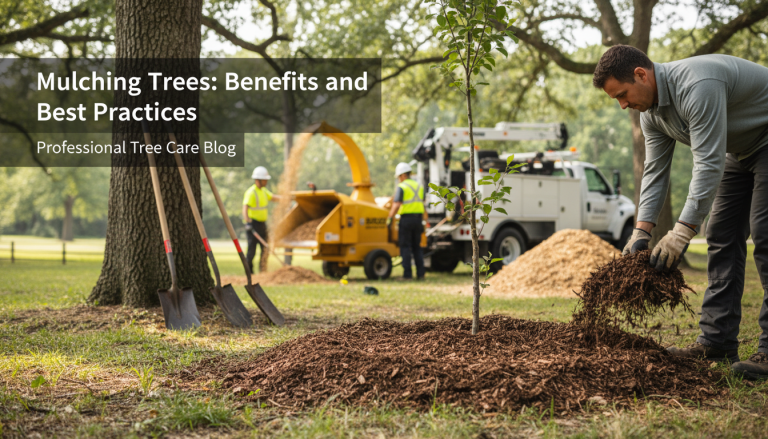
* Apply Mulch Correctly: Add a 5 to 10 cm layer of organic mulch in a donut shape, keeping it away from the trunk flare.
* Hydrate Roots: Perform deep watering if the spring has been dry or if the ground is fully thawed but not saturated.
* Monitor for Pests: Check for egg masses (like LDD moth) and early signs of infestation.
1. Post-Winter Inspection: Assessing the Damage
Before you grab any tools, you must perform a thorough visual inspection. Winter in Canada imposes significant stress on trees through heavy snow loads and salt spray from roads. You need to identify these issues early.
The Trunk and Bark
Walk around the entire tree. Look for vertical cracks in the bark. We call these “frost cracks” or “sunscald.” They occur when the sun warms the bark during the day and temperatures plummet at night, causing the wood to expand and contract rapidly. While trees often heal these wounds on their own, large cracks require professional assessment to ensure stability.
Check for “bleeding” or sap oozing from the bark. This sometimes indicates a bacterial infection or borer activity.
The Canopy and Branches
Scan the upper branches for hangers. These are broken branches caught in the canopy that have not fallen yet. They pose a significant safety risk to people and property below. Also, look for signs of dieback at the tips of branches. If the tips look brittle or lack buds, the branch might be dead.
Root Zone and Soil Stability
Inspect the ground around the base of the tree. Heaving soil or a leaning trunk indicates root plate failure. If your tree leans significantly more than it did last year, or if you see a mound of soil lifting on the side opposite the lean, this is an emergency. The tree has lost its structural anchorage.
2. Pruning and Trimming: The Technical Approach
Spring is an excellent time for pruning, provided you finish before the buds fully open. Pruning directs the tree’s energy into healthy growth rather than sustaining weak limbs.
The 3 Ds Strategy
Focus your efforts on the Three Ds:
1. Dead: Brittle wood with no bark or buds.
2. Damaged: Broken, splintered, or hanging limbs.
3. Diseased: Branches showing fungal growth, cankers, or unusual knots.
The Pruning Cut Technique
Do not make flush cuts against the trunk. You must preserve the branch collar (the swollen area where the branch meets the trunk). Cutting into the collar prevents the tree from sealing the wound, inviting rot. Make your cut just outside this collar.
Use the three-cut method for branches larger than 2 cm in diameter to prevent bark tearing:
1. Undercut: Cut upward halfway through the branch, about 30 cm from the trunk.
2. Relief Cut: Cut downward a few centimetres further out from the undercut until the branch falls.
3. Final Cut: Remove the remaining stub just outside the branch collar.
Note on Timing: Avoid pruning maples, birches, and elms in late spring. Maples and birches bleed sap heavily if pruned when active, and pruning elms attracts beetles that carry Dutch Elm Disease. Prune these species during late autumn or winter dormancy instead.
3. Soil Remediation and Mulching
Winter creates poor soil conditions. Heavy snow compacts the soil, reducing oxygen flow to the roots. Road salt runoff alters soil chemistry, creating toxic conditions for many species.
Flushing Salt Build-Up
If your trees sit near a roadway or driveway treated with de-icing salts, the soil likely contains high sodium levels. Sodium prevents roots from absorbing water. Flush the soil by applying a slow, steady stream of water to the root zone for several hours. This leaches the salt deeper into the soil, moving it away from the feeder roots.
The Science of Mulching
Mulch insulates the soil, retains moisture, and adds organic matter as it decomposes. However, improper mulching kills trees. Avoid “volcano mulching,” where homeowners pile mulch high against the trunk. This traps moisture against the bark, leading to rot and girdling roots.
Correct Application:
* Shape: Create a donut shape.
* Depth: Maintain a depth of 5 to 10 cm (2 to 4 inches).
* Clearance: Leave 15 cm (6 inches) of clear space around the trunk base.
* Material: Use shredded hardwood or wood chips. These materials break down at the right speed for Canadian climates.
4. Fertilization and Soil Amendments
Trees expend massive amounts of energy pushing out new leaves and flowers in the spring. If your soil lacks nutrients, the tree will show poor colour and weak growth.
Testing Before Feeding
Do not blindly apply fertilizer. Excess nitrogen promotes rapid, weak growth that appeals to pests. We recommend a simple soil test to determine pH levels and nutrient deficiencies. Most Canadian soils lean towards acidic, but urban soils often become alkaline due to concrete leaching.
Slow-Release Application
If the soil test indicates a need for nutrients, use a slow-release, granular fertilizer with a high nitrogen content (like a 10-6-4 ratio) spread evenly across the drip line. The drip line is the area on the ground directly beneath the outer circumference of the branches. Feeder roots reside here, not right next to the trunk.
5. Pest and Disease Management
Spring is when overwintering pests emerge. Catching them now prevents population explosions later in the summer.
Common Canadian Tree Pests
* LDD Moth (formerly Gypsy Moth): Look for tan, fuzzy egg masses on trunks and outdoor furniture. Scrape these off into a bucket of soapy water before they hatch.
* Emerald Ash Borer: While difficult to see, look for D-shaped exit holes in Ash trees. If you have an Ash tree, preventative injections are necessary every two years.
* Tent Caterpillars: These form silken tents in the forks of branches. Prune out the nests early in the morning when the caterpillars are inside.
Applying Dormant Oil
For fruit trees and certain ornamentals, applying horticultural dormant oil in early spring (before buds break) suffocates overwintering insects like mites, scales, and aphids. Ensure the temperature will remain above freezing for 24 hours after application.
6. Tools and Equipment: A Homeowner’s Arsenal
To perform these tasks effectively, you need the right tools. Keep blades sharp to ensure clean cuts that heal quickly.
* Bypass Pruners: For small twigs up to 2 cm diameter. Do not use anvil pruners on live wood, as they crush the tissue.
* Loppers: For branches up to 5 cm diameter. Look for ratcheting loppers to increase your leverage.
* Pruning Saw: For limbs larger than 5 cm. A curved blade cuts on the pull stroke, requiring less effort.
* Rigid Rake: For clearing heavy, wet debris from the base of the tree.
* Safety Gear: Always wear leather gloves, safety glasses, and sturdy boots. Eye protection is non-negotiable when working with wood under tension.
Environmental and Safety Benefits
Why invest time in spring maintenance? Beyond aesthetics, proper tree care yields tangible environmental and safety benefits.
Carbon Sequestration and Cooling
A healthy tree maximizes leaf surface area. This allows the tree to absorb more carbon dioxide and release more oxygen. Furthermore, a full canopy shades your home, significantly reducing cooling costs during the humid Canadian summer.
Storm Damage Prevention
Spring often brings high winds and thunderstorms. Removing deadwood and correcting structural defects now reduces the risk of limbs failing during a storm. This protects your roof, your vehicle, and your power lines. Proactive maintenance is always cheaper than emergency storm cleanup.
When to Hire a Professional
While homeowners can handle minor pruning and cleanup, certain situations require a certified arborist. Do not attempt DIY work in the following scenarios:
1. Height: If you have to climb a ladder to reach the limb, hire a pro. Work at heights requires fall protection gear.
2. Power Lines: Never prune trees near utility lines. Electricity can arc from the line to your tools. This is fatal.
3. Large Limbs: Branches that are heavy require rigging ropes to lower them safely without crushing the ground below.
4. Structural Instability: If the tree is leaning or has deep cracks, an arborist must use diagnostic tools to determine if the tree is safe to keep.
Conclusion
Your trees add value to your property and beauty to your neighbourhood. By following this spring checklist, you set the stage for a season of lush growth and robust health. Inspect your trees early, prune with precision, and manage the soil conditions to help them thrive.
However, tree work is demanding and dangerous. If you spot structural issues, large hangers, or signs of disease that you cannot identify, bring in an expert.
Need help assessing your winter damage or handling heavy pruning? Browse our directory to find a [tree service contractor near you](https://www.example.com/tree-services).