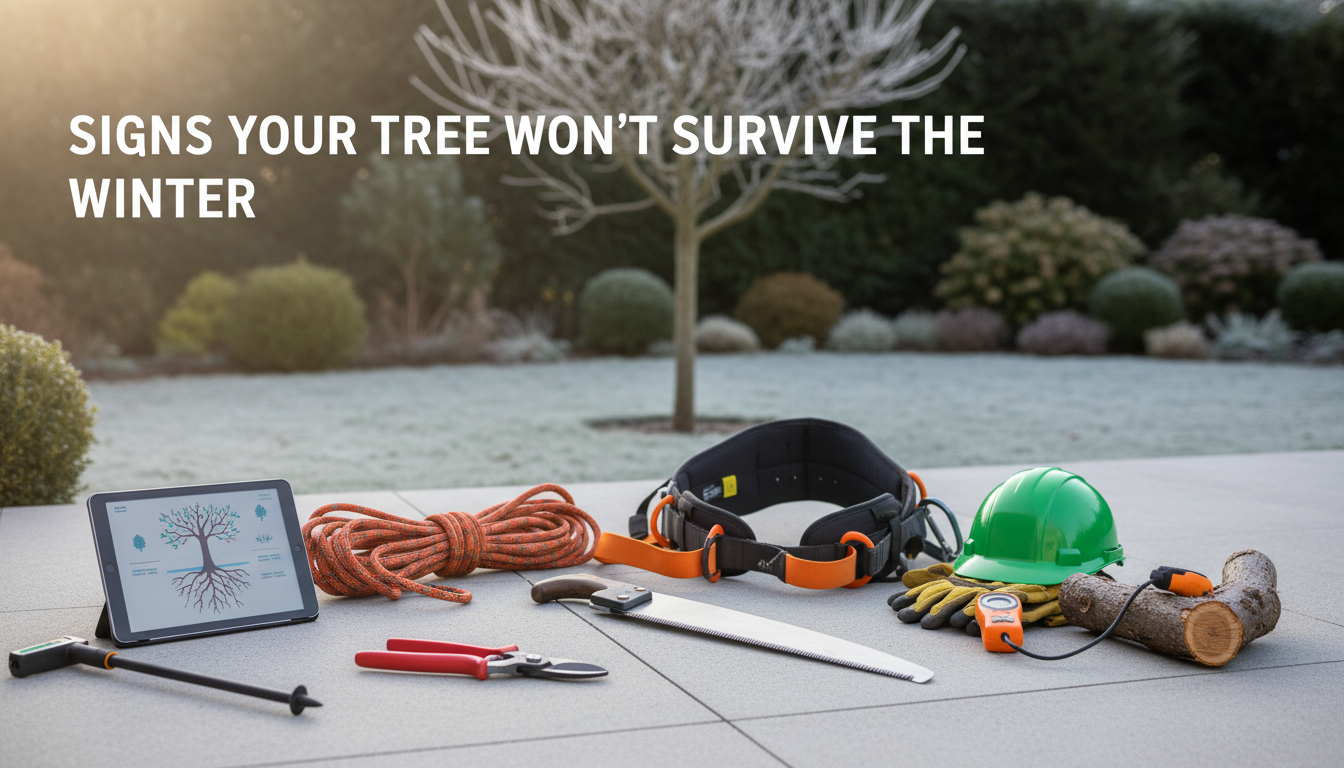
Signs Your Tree Won’t Survive the Winter
Signs Your Tree Won’t Survive the Winter: A 2025 Guide for Canadian Homeowners
Does that towering maple or sprawling oak in your yard have the structural integrity to withstand a heavy ice storm this year? Winter in Canada places immense stress on our landscape. The weight of snow, high winds, and the relentless freeze-thaw cycles expose weaknesses that remain hidden during the summer months. Identifying a hazardous tree before the first blizzard hits is not just about landscaping; it is about protecting your home, your car, and your family from significant damage.
Quick Summary: The Winter Survival Checklist
If you are in a rush, scan these red flags. If you see these on your property, you likely need professional intervention immediately.
* Dead Wood: Brittle branches that snap easily without bending.
* Deep Cracks: Vertical splits in the trunk or where branches attach.
* Fungi at the Base: Mushrooms growing near roots indicate internal rot.
* Leaning: A sudden or changing tilt, often with heaving soil.
* Premature Leaf Drop: The tree shed its leaves weeks before neighboring trees.
* Peeling Bark: Large patches of missing bark exposing smooth wood underneath.
* Hollow Sounds: Thumping the trunk results in a hollow echo rather than a solid thud.
—
The Mechanics of Winter Tree Failure
To understand why trees fail, you must understand what winter does to them. Canadian winters create a specific set of physics problems for your trees. Frozen wood is less flexible than warm wood. When you add the static load of heavy, wet snow or the dynamic load of gusting winds, a tree requires maximum structural integrity to survive. A compromised tree might look fine in July, but it becomes a ticking time bomb in January.
We will break down the specific indicators that suggest your tree lacks the biological or structural strength to handle the season.
Sign 1: The “Dead Wood” Snap Test
Dead branches are the first things to fall when the wind picks up. While some dead wood is normal, an excess indicates the tree is struggling to transport nutrients. You can test this easily from the ground using a long pole or by inspecting low-hanging branches.
How to Test:
Find a small twig or branch. Try to bend it. Living wood is pliable; it will bend significantly before breaking and will reveal green, moist fibers inside. Dead wood is brittle. It will snap cleanly and quickly with a dry sound, revealing brown or grey dry interiors.
Why It Matters:
If a tree has large sections of dead wood (known as “stagheading” in the upper canopy), the tree has likely shut down those sections to conserve energy. This signals advanced decline. These dead sections act as dry sails during winter winds, creating leverage that can topple the entire tree or send heavy limbs crashing through your roof.
Sign 2: Structural Cracks and Deep Splits
Not all cracks are fatal, but you must know the difference between a superficial wound and a structural failure. Trees sometimes develop “frost cracks” during sudden temperature drops. These are vertical cracks that run up the trunk. While they damage the tree, they are not always immediate death sentences.
However, you need to look for deep vertical splits or cracks located at “unions” (where two branches meet).
The Danger of Co-Dominant Stems:
Look for trees with two main trunks growing in a ‘V’ shape. This is a weak union. If you see a crack forming at the bottom of that ‘V’, the tree is literally pulling itself apart. The weight of snow accumulating in that crotch will act as a wedge, forcing the trunks apart until one fails.
Sign 3: Root Plate Issues and Heaving Soil
The root system is the anchor. If the anchor fails, the ship sinks. In tree terms, if the roots are compromised, the entire tree will fall regardless of how healthy the trunk looks.
What to Look For:
Walk around the base of the tree. Do you see the soil heaving upwards on one side? This usually happens opposite to a lean. It indicates the roots are pulling out of the ground.
Fungal Indicators:
Look for mushrooms or conks (bracket fungi) growing at the base of the tree or directly on the root flares. These fungi are not growing in the soil; they are feeding on decaying wood *inside* your tree’s roots. If you see fungi at the base, assume the structural integrity of the root system is gone.
Sign 4: The Lean
Trees rarely grow perfectly straight. A gradual lean that has developed over twenty years is usually stable; the tree builds “reaction wood” to support itself against gravity.
The Warning Sign:
The problem is a *new* lean or a *changing* lean. If a tree that was upright last year is now tilting, or if a leaning tree has dipped further, it is in immediate danger of collapse. This often correlates with the soil heaving mentioned above. Winter winds coming from a different direction than the prevailing summer winds can push a newly leaning tree past its tipping point.
Sign 5: Premature Leaf Drop and Discoloration
Think back to the autumn. Did your tree lose its leaves in August or early September, while the rest of the neighborhood trees held on until October?
The Science:
Premature leaf drop is a stress response. The tree recognized it did not have the water or energy reserves to maintain its foliage, so it entered dormancy early to survive. While this is a survival mechanism, it indicates a tree that is already operating on a deficit. It enters winter with low energy reserves. A tree in this state is less likely to heal from winter injuries and more likely to succumb to pests or diseases come spring.
For coniferous trees (pines, spruces), look for yellowing or browning needles. While pines do shed old needles naturally, a tree that turns entirely yellow or brown is likely dead or dying.
Sign 6: Pest Infestation and Woodpecker Activity
Insects leave specific signatures. Look for small, perfectly round holes in the bark (exit holes from borers) or sawdust-like distinct piles at the base of the tree (frass).
The Woodpecker Clue:
Woodpeckers are excellent tree inspectors. If you see heavy woodpecker damage—large patches of bark stripped away or deep holes drilled into the trunk—they are hunting for larvae deep inside the tree. Woodpeckers rarely waste energy on healthy trees. Heavy bird activity is a strong indicator that the tree is rotting from the inside out.
Sign 7: Man-Made Damage (Construction Injury)
This is often the most overlooked sign. Did you have a driveway paved, a patio installed, or a utility trench dug near the tree in the last 3 to 5 years?
The Delayed Reaction:
Tree roots extend far beyond the canopy drip line. Severing major roots during summer construction puts the tree into shock. The tree may stay green for a season or two using stored energy, but the structural anchor is gone. When the ground freezes and the wind howls, these “zombie trees” often topple because their root plate was cut years ago.
Environmental and Safety Implications
Ignoring these signs affects more than just your garden aesthetics. A falling tree in winter poses unique hazards.
Utility Disruptions:
Frozen branches striking power lines are a leading cause of winter power outages. In Canada, losing power during a cold snap can lead to frozen pipes and unsafe home temperatures.
Property Liability:
If a tree on your property shows clear signs of neglect (like dead wood or rot) and it damages a neighbor’s property, you could be held liable for negligence. Insurance companies frequently look for evidence of pre-existing conditions when processing claims.
Ecosystem Balance:
While removing a hazardous tree is necessary, managing your trees proactively helps the local ecosystem. Healthy trees provide windbreaks that reduce heating costs and offer shelter for birds during the freeze. Identifying a sick tree early might allow an arborist to save it with cabling or bracing rather than removal, preserving the canopy for the future.
Maintenance and Practical Tips for Winter Prep
If your inspection reveals only minor issues, you can take steps to help your tree survive the coming freeze.
1. Hydrate Before the Freeze:
If the autumn has been dry, water your trees deeply before the ground freezes solid. This helps evergreens prevent winter burn (desiccation) caused by cold winds.
2. Mulch Correctly:
Apply a 2-4 inch layer of wood chip mulch around the base (but not touching the trunk). This insulates the roots against extreme temperature fluctuations.
3. Cable and Brace:
If a tree has a structural defect like a V-crotch but is otherwise healthy, a professional can install high-strength cables. These cables limit the movement of the branches, preventing them from splitting under snow load.
4. Prune the Dead Weight:
Remove dead or crossing branches before the snow flies. This reduces the surface area for snow accumulation and removes potential projectiles.
Don’t Guess—Verify
Winter tree work is dangerous. Frozen wood reacts unpredictably to chainsaws, and icy ladders are a recipe for disaster. If you spotted any of the signs listed above, do not attempt to fix them yourself.
Take Action Now:
The cost of an inspection is a fraction of the cost of an insurance deductible or a new roof. Professional arborists can use tools like resistographs to measure internal decay without harming the tree.
If you are unsure about the safety of the trees on your property, connect with a qualified expert who can give you a definitive answer.
[Browse our directory to find a certified tree service contractor near you.]