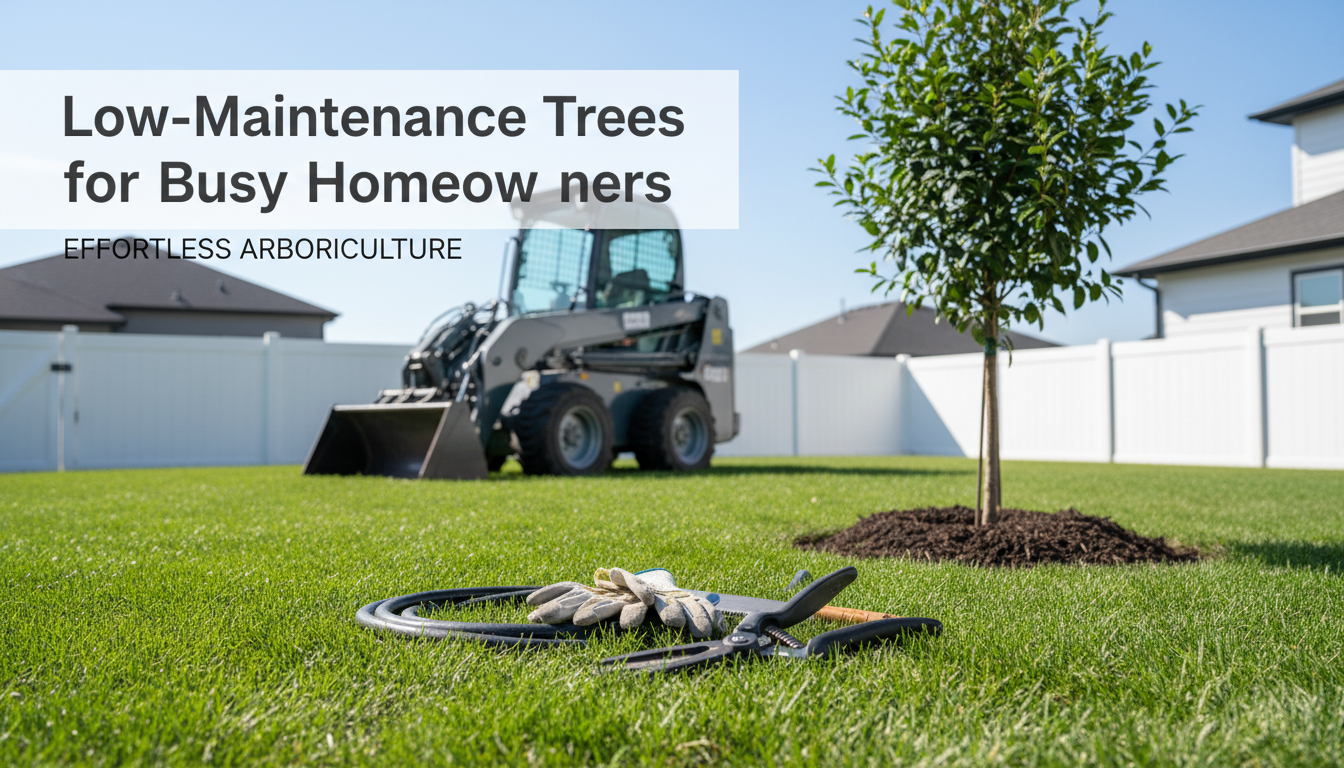
Low-Maintenance Trees for Busy Homeowners
Do you crave a stunning landscape but lack the time to maintain it?
Creating a beautiful yard requires effort, but maintaining it should not dominate your weekends. For Canadian homeowners, the challenge involves finding species that withstand harsh winters, resist local pests, and look great without constant pruning or raking. You want foliage that enhances your property value, not a second job.
We curated this guide specifically for the busy homeowner. We focus on hardiness, cleanliness, and structural integrity. These trees thrive in the Canadian climate and respect your time.
Quick Summary: Top Low-Maintenance Trees for Canada
If you want immediate answers, here are the top contenders for a hands-off landscape:
* The Canadian Icon: Sugar Maple (provides sturdy structure and distinct fall colour).
* The Evergreen Shield: Colorado Blue Spruce (offers year-round privacy with zero leaf cleanup).
* The Spring Stunner: Serviceberry (native species that feeds birds and requires little water).
* The City Dweller: Japanese Lilac Tree (tolerates road salt and pollution easily).
* The Compact Choice: Emerald Cedar (perfect for hedging without heavy pruning).
—
What Defines a “Low-Maintenance” Tree?
Before you head to the nursery, you must understand what makes a tree easy to manage. Not all trees behave the same way. A “set it and forget it” tree possesses specific traits that reduce your workload.
Slow to Moderate Growth Rate
Fast-growing trees often sound appealing because they fill a space quickly. However, rapid growth usually results in weak wood. Weak wood breaks easily during ice storms or heavy winds, leading to emergency cleanup. Slower-growing trees build dense, strong wood structure. This resilience means fewer broken branches on your lawn after a winter storm.
Pest and Disease Resistance
Dealing with aphids, beetles, or fungal infections consumes time and money. You want species that naturally fight off common Canadian pests. For example, selecting a disease-resistant elm cultivar saves you from the constant battle against Dutch Elm Disease.
Minimal Debris
All trees drop leaves or needles. However, some create significantly more mess than others. Avoid trees that drop heavy fruit, large seed pods, or excessive twigs. You want trees that drop their leaves over a short period in the fall, allowing you to rake once and finish the job.
—
Top Tree Species for Canadian Yards
We selected these trees based on their ability to survive Canadian hardiness zones (usually Zone 3 through 6) and their “plant and ignore” nature.
1. Sugar Maple (Acer saccharum)
Nothing beats the Sugar Maple for Canadian authenticity. While large deciduous trees require leaf raking, the Sugar Maple pays you back with incredible durability and aesthetics.
* Why it works: This tree forms a strong central leader and hard wood. It rarely suffers damage from ice storms compared to silver maples. The leaves drop relatively quickly in autumn, consolidating your cleanup efforts.
* Hardiness: Zones 3–8.
* Best feature: Unmatched vibrant orange and red fall colour.
2. Colorado Blue Spruce (Picea pungens)
For homeowners who want green all year, the Colorado Blue Spruce serves as the ultimate low-maintenance solution. It keeps its shape naturally without pruning.
* Why it works: You never rake leaves. The needles stay on the tree for years. It acts as a windbreak, which reduces snow accumulation on your driveway. Pests rarely bother healthy spruces in Canada.
* Hardiness: Zones 2–7.
* Best feature: Distinctive silvery-blue needles and a pyramidal shape that looks professional without trimming.
3. Serviceberry (Amelanchier)
Often called Saskatoon berry or Juneberry, this native plant bridges the gap between a large shrub and a small tree. It fits perfectly in smaller urban yards or under power lines.
* Why it works: As a native species, it adapted to our climate centuries ago. It tolerates varying soil conditions. The small berries attract birds, which often clear the fruit before it hits the ground (nature’s cleanup crew).
* Hardiness: Zones 2–9.
* Best feature: White spring flowers followed by edible fruit and brilliant red fall foliage.
4. Japanese Lilac Tree (Syringa reticulata)
Do you live near a busy street? The Japanese Lilac Tree tolerates road salt, compacted soil, and pollution better than almost any other flowering tree.
* Why it works: It remains small (up to 30 feet), so you rarely need to prune it for height safety. It blooms later than other lilacs, extending the colour in your garden into early summer. It resists mildew, a common problem for shrub lilacs.
* Hardiness: Zones 3–7.
* Best feature: Massive, creamy-white flower clusters that smell wonderful.
5. Eastern Redbud (Cercis canadensis)
For those in Southern Ontario or milder parts of British Columbia, the Eastern Redbud offers stunning beauty with minimal effort. It remains small and manageable.
* Why it works: It fixes its own nitrogen in the soil, meaning it rarely needs fertilizer. It has a graceful, spreading habit that looks architectural without human intervention.
* Hardiness: Zones 4–9 (Best for warmer Canadian regions).
* Best feature: Pink blossoms cover the branches directly before the leaves appear.
—
Environmental and Safety Benefits
Choosing the right tree does more than save you time on weekends. It actively improves your property’s safety and microclimate.
Strategic Windbreaks
Planting evergreens like the Blue Spruce on the north or west side of your home blocks cold winter winds. This reduces the workload on your furnace. A well-placed windbreak cuts heating costs by up to 30%. Because these trees keep their needles, they work for you all winter long.
Ice Storm Resilience
In Canada, ice storms pose a genuine threat to property. Fast-growing trees like Weeping Willows or Poplars possess brittle wood. When ice accumulates, these heavy limbs snap and damage roofs, cars, or power lines. The low-maintenance trees listed above, specifically the Sugar Maple and Serviceberry, boast superior wood strength. Investing in strong trees protects your home.
Soil Stabilization
Strong root systems prevent erosion. If your property has a slope, planting a hardy tree anchors the soil. This prevents mudslides or washouts during the spring thaw, saving you from expensive landscape grading repairs later.
—
Practical Maintenance Tips for the “Hands-Off” Homeowner
Even low-maintenance trees require a strong start. Follow these steps during planting to ensure you rarely need to intervene later.
Mulch Immediately
Applying a layer of organic mulch around the base of your tree solves three problems at once
1. Moisture Retention: Mulch keeps the soil moist, drastically reducing how often you need to water.
2. Weed Suppression: It stops weeds from stealing nutrients, saving you from weeding.
3. Mower Protection: It creates a buffer zone so you do not accidentally hit the trunk with your lawnmower (a leading cause of young tree death).
The Watering Bag Method
For the first two years, young trees need consistent water to establish roots. Buy a slow-release watering bag. You simply fill the bag once a week, and it slowly drips water directly to the roots over several hours. This eliminates the need for standing outside with a hose for 20 minutes.
Pruning: Hiring vs. DIY
The trees listed in this guide require very little pruning. However, every tree eventually needs a dead branch removed. For busy homeowners, the best tool is a phone number. Climbing trees or handling chainsaws carries significant risk. Professional arborists identify structural issues early. One visit every 3 to 5 years usually suffices for these hardy species.
Fall Cleanup Efficiency
To minimize raking, use your lawnmower. Instead of raking leaves into bags, run your mower over them. This chops the leaves into tiny pieces that settle into the grass. These pieces decompose quickly, returning nitrogen to your lawn. You eliminate the raking chore and fertilize your grass simultaneously.
—
Selecting the Right Spot
Placement dictates maintenance. Planting the wrong tree in the wrong spot guarantees future work. Consider these factors
Overhead Lines: Never plant a Sugar Maple under a power line. You will force utility companies to prune it aggressively, leaving you with an ugly, stressed tree. Choose the Serviceberry or Japanese Lilac for these spots.
Proximity to Foundations: Large trees drink vast amounts of water. Planting too close to your home causes soil shrinkage, which shifts your foundation. Keep large trees at least 6 metres (20 feet) away from your house.
Hardscape Damage: Surface roots lift interlock driveways and crack sidewalks. Maples and Spruces generally behave well, but always allow space for the root flare to expand.
—
Ready to Upgrade Your Landscape?
A low-maintenance yard starts with a smart plan. While the trees listed above thrive in Canada, soil conditions vary from neighbourhood to neighbourhood. Clay soil in the valleys differs vastly from the rocky soil in the Canadian Shield.
Getting a professional opinion ensures you plant the right tree the first time. Professionals assess your soil, sunlight, and space to recommend the perfect species for your lifestyle. They handle the heavy lifting of planting, staking, and initial mulching.
Don’t guess with your landscape. Save time and ensure long-term success by consulting a local expert.
[Browse our directory to find a tree service contractor near you right now.]