How to Identify Common Tree Diseases
How to Identify Common Tree Diseases: A Canadian Homeowner’s Guide (2025)
Is that discoloured spot on your maple leaf just a sign of early autumn, or is it a warning sign of a serious infection? As a homeowner in Canada, you likely take pride in the trees that shade your yard and boost your property value. However, our harsh winters and humid summers create unique conditions for various fungi, bacteria, and pests. Identifying these issues early makes the difference between a simple pruning job and an expensive removal.
This guide helps you act as a first responder for your landscape. We will walk you through the signs of distress, specific diseases common to Canadian regions, and the steps you must take to protect your property.
Quick Summary: The Tree Health Checklist
If you need answers fast, use this checklist to gauge the health of your tree. If you check more than one box, you likely need professional assistance.
* Leaf Anomalies: Look for spots, curling edges, or leaves dropping before September.
* Bark Issues: Check for deep cracks, peeling bark, or oozing sap (cankers).
* Fungal Growth: Mushrooms growing at the base or shelf-like brackets on the trunk indicate internal rot.
* Dead Branches: A section of the tree that has no leaves while the rest is green (flagging) suggests a localized infection.
* Pest Evidence: Look for sawdust at the base or specific holes (D-shaped or round) in the bark.
The Inspection Toolkit: How to Examine Your Trees
You do not need a degree in arboriculture to perform a basic health check. You just need a systematic approach. Most homeowners fail to notice problems because they look at the tree as a whole rather than examining its parts. To identify disease effectively, you must inspect the tree from the bottom up.
1. The Root Collar Inspection
Start where the tree meets the ground. This area is critical. You want to see a natural flare where the trunk expands into roots. If the trunk goes straight into the ground like a telephone pole, the tree may be planted too deep or suffering from girdling roots. Look for mushrooms or fungal conks growing here. Fungi at the base usually indicate root rot, which destabilizes the tree and creates a significant safety hazard.
2. The Trunk Examination
Scan the bark for injuries. Mechanical damage from lawnmowers often provides an entry point for pathogens. Look for “cankers,” which appear as sunken, dead areas of bark often surrounded by a ridge of callus tissue. Cankers are localized dead zones where bacteria or fungi have killed the cambium layer beneath.
3. The Canopy Check
Step back and look at the overall shape. Is the canopy thinning? Are the leaves smaller than usual? Look for “dieback,” where the tips of branches die from the outside in. This often signals root stress or a vascular disease that prevents water from reaching the top of the tree.
Decoding Symptoms by Tree Part
Different diseases attack different parts of the tree. By isolating where the symptom appears, you narrow down the list of potential culprits.
Foliage Symptoms
Leaves serve as the solar panels of your tree. When they malfunction, the tree starves.
* Chlorosis: This appears as yellowing leaves with green veins. It typically indicates a nutrient deficiency (often iron or manganese) or high soil pH, common in many parts of the Prairies and Southern Ontario.
* Leaf Spots: Small, defined circles of dead tissue. While often cosmetic (like Tar Spot on maples), heavy infestations can weaken the tree.
* Powdery Mildew: A white, dusty coating on leaves. It thrives in humid Canadian summers and blocks sunlight from reaching the leaf surface.
* Wilting: If leaves droop despite adequate rainfall, the internal plumbing of the tree (xylem) may be blocked by a vascular wilt disease.
Bark and Trunk Symptoms
* Bleeding Cankers: Dark, wet spots on the bark that ooze liquid suggest bacterial infections.
* Cracks and Splits: While frost cracks are common in Canada due to freeze-thaw cycles, vertical cracks that do not seal over can invite rot.
* Woodpecker Holes: Woodpeckers are not the disease, but they are the symptom. They drill holes to find larvae. If you see fresh woodpecker damage, your tree likely has a boring insect infestation.
Common Canadian Tree Diseases to Watch For
Depending on your region, you will likely encounter these specific offenders. Recognizing them immediately allows you to manage them before they spread to your neighbours.
Black Knot (Apiosporina morbosa)
Target: Prunus species (Plum, Cherry, Chokecherry).
Identification: This is one of the most recognizable diseases in Canada. It manifests as rough, black, charcoal-like swellings on twigs and branches. It looks as if someone stuck a piece of burnt coal onto the branch.
Impact: The knots girdle branches and kill them. Over time, the tree becomes stunted and eventually dies.
Solution: You must prune out infected branches at least 15 to 20 centimetres (6 to 8 inches) below the knot during late winter when the fungus is dormant. Sterilize your pruners between cuts.
Tar Spot (Rhytisma acerinum)
Target: Maples (especially Norway and Silver Maples).
Identification: Leaves develop bright yellow spots in early summer, which eventually turn into raised, shiny black spots resembling splashes of tar.
Impact: While it looks alarming, Tar Spot is mostly a cosmetic issue. It rarely kills the tree but can cause early leaf drop.
Solution: Sanitation is key. Rake up and dispose of falling leaves in the autumn to prevent the fungus from overwintering and reinfecting the tree next spring. Do not compost these leaves unless your pile generates significant heat.
Dutch Elm Disease (Ophiostoma ulmi)
Target: Elms.
Identification: Look for “flagging” in mid-summer. One branch will suddenly wilt and turn yellow or brown while the rest of the tree remains green. If you peel back the bark of an infected twig, you will see brown streaking in the wood.
Impact: This is a fatal vascular wilt. The fungus clogs the water-conducting vessels of the tree.
Solution: Immediate removal of the infected tree is often required to save nearby elms. Certified arborists can sometimes use fungicidal injections as a preventative measure for high-value trees.
Fire Blight (Erwinia amylovora)
Target: Apple, Crabapple, Pear, Mountain Ash.
Identification: Infected branches look like they have been scorched by fire. Leaves turn black or dark brown but stay attached to the branch. The tips of branches often curl over into a “shepherd’s crook” shape.
Impact: This bacterial disease spreads rapidly, especially during warm, wet springs. It can kill a tree quickly if it reaches the main trunk.
Solution: Prune infected branches well below the damage. You must avoid pruning when the weather is wet, as this spreads the bacteria.
Emerald Ash Borer Damage
Target: Ash trees.
Identification: While technically a pest, the damage mimics disease. Look for thinning canopies and D-shaped exit holes in the bark. New shoots (epicormic growth) may sprout aggressively from the trunk as the tree tries to survive.
Impact: This invasive beetle has devastated ash populations across Eastern Canada.
Solution: Once distinct symptoms appear, it is often too late. Preventative injections by a licensed professional are the only effective defense.
Environmental and Safety Implications
Ignoring tree disease does not just put your landscaping at risk. It poses genuine safety and environmental hazards.
The Safety Risk:
Diseases like root rot and heart rot compromise structural integrity. A tree may look full and green on the outside while the inside turns to mush. During the high winds common in Canadian storms, these hollowed-out trees snap or uproot, causing damage to homes, vehicles, and power lines. As a homeowner, you hold liability for maintaining safe trees on your property.
The Environmental Spread:
Fungal spores and bacterial pathogens do not respect property lines. Allowing a diseased tree to remain standing turns your yard into a breeding ground that infects the entire neighbourhood. Managing disease on your property helps protect the urban canopy of your entire community.
Maintenance and Prevention Tips
Healthy trees defend themselves better than stressed trees. Think of maintenance as preventative medicine.
1. Water Correctly
Trees need deep watering, not frequent sprinkles. A lawn sprinkler rarely penetrates deep enough for tree roots. During dry spells, place a hose at the drip line (the outer edge of the branches) and let it run slowly for 30 minutes. Move it around the tree to ensure even coverage.
2. Mulch Properly
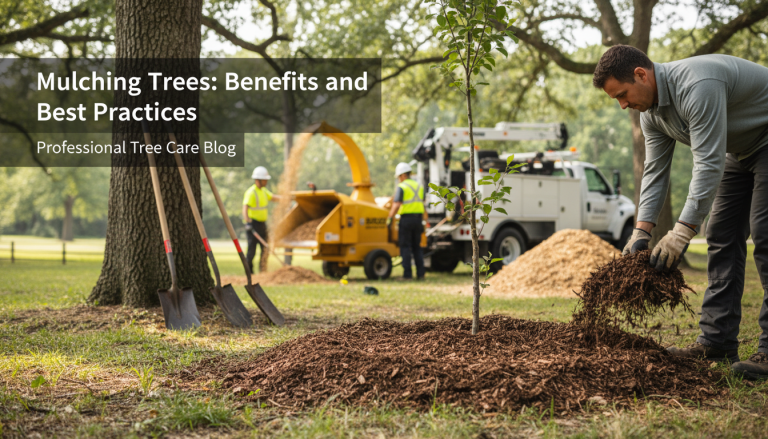
Mulch helps retain moisture and regulate soil temperature. However, you must avoid “volcano mulching” (piling mulch high against the trunk). This traps moisture against the bark and invites rot and rodents. Spread mulch in a donut shape, keeping it 5 to 10 centimetres away from the trunk base.
3. Prune with Hygiene in Mind
Whenever you prune a diseased branch, you coat your saw or shears with pathogens. If you then cut a healthy branch, you perform a direct inoculation of the disease. Always wipe your tools with rubbing alcohol or a 10% bleach solution between cuts when dealing with sick trees.
4. Avoid Mechanical Injury
Nicks from string trimmers are the number one cause of preventable tree disease in residential areas. These wounds bypass the bark’s natural defense, allowing fungi to enter the vascular system. Create a mulch ring around your tree to keep lawn equipment at a safe distance.
When to Call a Professional
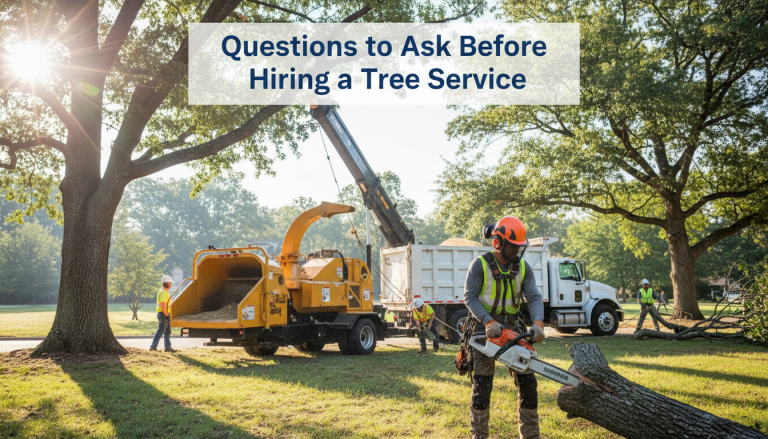
Identifying a spot on a leaf is one thing. diagnosing a structural defect or treating a vascular wilt is another. Tree work involves heights, heavy wood, and dangerous equipment. Furthermore, many treatments for serious diseases require restricted-use pesticides that only licensed applicators can handle in Canada.
If you see large dead branches, fungal conks on the trunk, or sudden dieback, you need an expert opinion. A certified arborist can provide a definitive diagnosis and a management plan that aligns with local bylaws.
Do not wait until the next storm turns a sick tree into a liability.
Browse our directory today to [find a qualified tree service contractor near you](#) who can assess your trees and keep your property safe and beautiful.