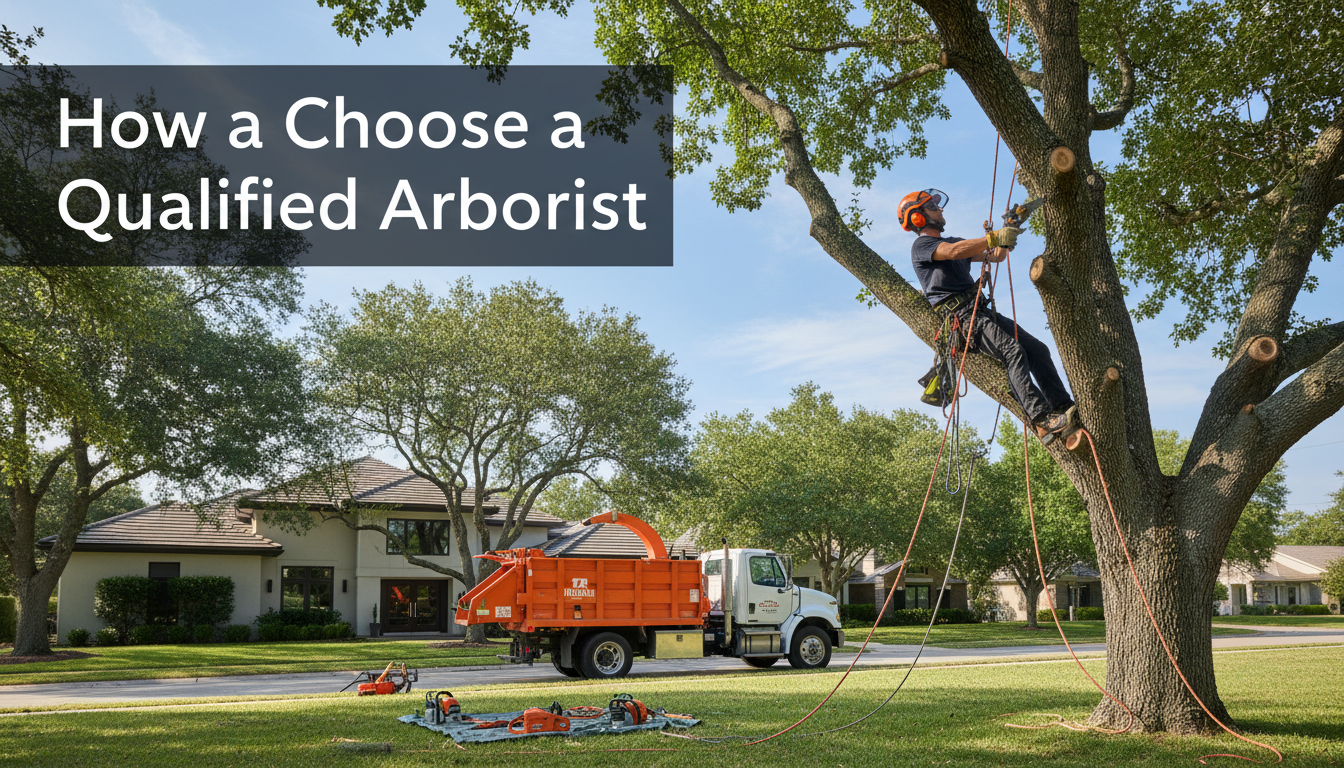
How to Choose a Qualified Arborist
How to Choose a Qualified Arborist in Canada
Tree work ranks among the most dangerous professions in the world. When you hire someone to remove a hazardous limb hanging over your roof or to fell a massive Maple in your backyard, you invite high risk onto your property. Do you know if the person holding the chainsaw carries the right insurance? Do you know if they understand the biology of the tree, or are they simply cutting wood?
Selecting a qualified arborist ensures the safety of your home, the health of your landscape, and your financial security. This guide details exactly how to vet a tree service professional in Canada.
Quick Summary: The Hiring Checklist
If you need a quick answer, review this checklist before hiring anyone. A qualified arborist will be able to provide proof for every item on this list.
* ISA Certification: Verify they hold a current International Society of Arboriculture (ISA) credential.
* Proof of Insurance: Demand a Certificate of Insurance showing liability coverage (minimum $2 million) and workers’ compensation (WSIB or provincial equivalent).
* Detailed Written Estimates: Reject verbal quotes. Get a breakdown of costs, scope of work, and cleanup procedures.
* No Topping: Ensure they adhere to modern pruning standards and never propose “topping” a tree.
* References: Ask for contact information from recent local clients.
Understanding the Arborist Credential
Many homeowners confuse landscapers with arborists. While a landscaper handles lawn care, planting, and hardscapes, an arborist specializes in the art and science of planting, caring for, and maintaining individual trees.
The ISA Certification Standard
In Canada, the gold standard for tree care professionals is the ISA Certified Arborist credential. The International Society of Arboriculture (ISA) grants this certification only after a candidate passes a comprehensive exam covering distinct domains, including:
* Soil management
* Identification and selection
* Installation and establishment
* Safe work practices
* Tree biology
* Pruning
* Diagnosis and treatment
* Urban forestry
* Tree protection
To even sit for the exam, the individual must have three years of full-time experience in arboriculture or a degree in a related field. When you hire an ISA Certified Arborist, you hire someone who has proven their knowledge. You can verify a certification instantly on the ISA website.
Provincial Associations
Look for membership in local chapters, such as ISA Ontario, the Atlantic Chapter, or the Prairie Chapter. Membership indicates the arborist stays current with regional pests, diseases, and climate challenges specific to the Canadian landscape.
Insurance and Liability: The Non-Negotiables
You must prioritize insurance over price. If an uninsured worker falls from a tree on your property, you could be held liable for their medical bills and lost wages. If a limb falls on your neighbour’s car and the contractor lacks liability coverage, you pay for the damages.
Liability Insurance
A professional tree service must carry General Liability Insurance. This protects your property and third-party property from damage. In Canada, look for a minimum of $2,000,000 in coverage, though many reputable companies carry $5,000,000.
Action Step: Do not just take their word for it. Ask the company to have their insurance broker email a Certificate of Insurance directly to you. This ensures the policy is current and has not been cancelled due to non-payment.
Workers’ Compensation (WSIB/WCB)
In Canada, workers’ compensation is mandatory for construction and tree work in most provinces. This coverage (known as WSIB in Ontario, WCB in the West) protects the workers if they get injured.
Ask for a Clearance Certificate. This document proves the business is registered and in good standing. If you hire a “cash job” operator who does not pay into the system, you effectively become the employer. Consequently, you assume the risk for workplace injuries.
The Equipment and Safety Gear Test
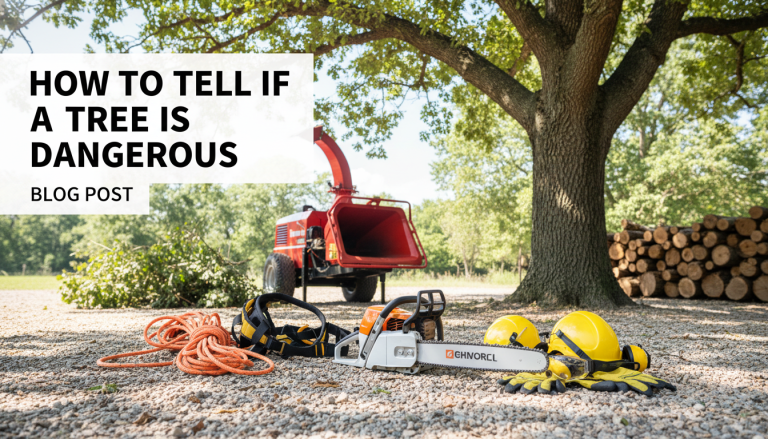
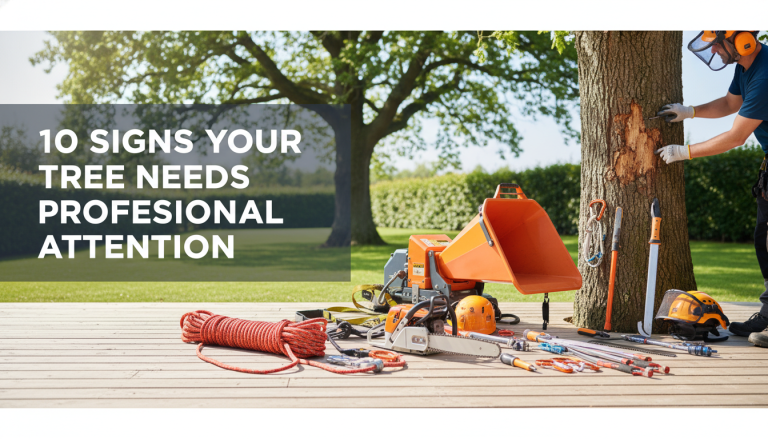
You can tell a lot about a tree service by looking at their gear. Professional arborism relies on technology and rigid safety protocols.
Personal Protective Equipment (PPE)
Every crew member on your property should wear:
* Helmets: To protect against falling debris.
* Eye and Ear Protection: Chainsaws and chippers are loud and throw sawdust.
* Chainsaw Protection Pants (Chaps): Special fabric that jams a chainsaw chain upon contact to prevent leg injuries.
* High-Visibility Clothing: Crucial for ground crews working near traffic or heavy machinery.
If a crew shows up in shorts, t-shirts, and baseball caps, send them away immediately. They are disregarding basic safety standards.
Climbing Gear vs. Spikes
Pay close attention to how they plan to climb your tree.
Do not allow climbing spikes (gaffs) for pruning. Spikes puncture the cambium layer of the tree, creating open wounds that invite insects, bacteria, and fungi. Spikes are only acceptable during a tree removal where the tree will not survive anyway.
Qualified arborists use ropes, harnesses, and friction-saving devices to climb trees without damaging the bark. Alternatively, they may use aerial lifts (bucket trucks) if access allows.
Red Flags to Avoid
Protect yourself by watching for these common warning signs of unqualified contractors.
1. Tree Topping
Topping is the indiscriminate cutting of tree branches to stubs or to lateral branches that are not large enough to assume the terminal role. It is the absolute worst thing you can do to a tree.
* Why it fails: It causes stress, leads to decay, and forces the tree to grow weak, rapid-growth shoots (water sprouts) that break easily.
* The Pro Approach: A qualified arborist will suggest crown reduction or thinning cuts that preserve the tree’s natural structure and health.
2. Door-to-Door Solicitation
Be wary of individuals knocking on your door claiming they “were just in the neighbourhood” and noticed your tree looks sick. Reputable arborists rarely need to canvas neighbourhoods for work. They operate on schedules and referrals.
3. The “Too Low” Quote
If one quote is 40% lower than the others, ask why. Usually, the operator is cutting corners on insurance, safety gear, or waste disposal. A cheap job often becomes expensive when you have to repair your fence or treat a damaged tree later.
The Estimate and Contract Process
Professionalism manifests in paperwork. A vague verbal agreement leads to disputes. Ensure your written estimate includes the following details.
Scope of Work
The contract must specify exactly which trees the crew will service. It should detail the type of pruning (e.g., “remove deadwood greater than 2 inches in diameter”) or the method of removal.
Cleanup and Disposal
Clarify what happens to the wood.
* Will they chip the brush?
* Will they leave the wood for firewood, or haul it away?
* If they leave it, will they cut it into manageable lengths?
Stump Grinding
Tree removal usually involves cutting the tree flush to the ground. Stump grinding is a separate machine and process. Most quotes exclude stump grinding unless specifically requested. Ensure this line item appears on the contract if you want the stump gone.
Timeline
While weather dictates tree work schedules, the contract should provide an estimated start date and completion timeframe.
Environmental and Safety Benefits
Hiring a qualified arborist does more than just tidy up your yard. It contributes to the broader ecosystem and community safety.
Disease Mitigation
Improper pruning tools can spread diseases like Dutch Elm Disease or Oak Wilt from tree to tree. Qualified arborists sanitize their tools and know the correct seasons to prune sensitive species to prevent infection.
Storm Prevention
Proactive maintenance reduces the risk of storm damage. An arborist can identify structural defects—such as included bark or co-dominant stems—that a layperson would miss. Installing cables or bracing rods can save a valuable mature tree from splitting during a heavy Canadian snowfall or windstorm.
Property Value
Well-maintained mature trees increase property value by up to 20%. Conversely, disfigured or unsafe trees become a liability that lowers curb appeal and scares off potential buyers.
Maintenance and Practical Tips for Homeowners
Once you find a qualified arborist, work with them to create a long-term plant health care plan.
1. Schedule Inspections: Have an arborist inspect your large trees every 3 to 5 years. Early detection of rot or pests saves money.
2. Mulch Correctly: Apply a 2-4 inch layer of organic mulch around the base of the tree, but keep it away from the trunk (no “volcano” mulching). This retains moisture and protects roots.
3. Water During Droughts: diverse Canadian summers can get hot and dry. Deep watering helps trees withstand stress and fight off pests.
4. Prune in Dormancy: For many species, late fall or winter serves as the best time to prune. The lack of leaves makes the structure visible, and the tree is less susceptible to stress.
Make the Right Choice for Your Landscape
Your trees are living assets that require specialized care. Do not gamble with your property safety or the health of your landscape by hiring unverified contractors. Take the time to check certifications, verify insurance, and demand detailed contracts.
Ready to find a professional you can trust? We have curated a list of vetted local experts ready to help you.
[Browse our directory to find a tree service contractor near you.](YOUR_DIRECTORY_LINK_HERE)