
DIY Tree Care vs. Hiring a Professional: What You Need to Know
DIY Tree Care vs. Hiring a Professional: What You Need to Know
Do you actually save money cutting down your own tree, or are you just strictly increasing your odds of an emergency room visit? Every spring and fall, Canadian homeowners look at the overgrowth in their yards and reach for a ladder. While the DIY spirit drives us to handle home maintenance ourselves, arboriculture occupies a dangerous niche between gardening and heavy construction.
Tree work ranks statistically as one of the most dangerous professions in the world. Yet, hardware stores sell chainsaws to anyone with a credit card. This guide breaks down exactly where the line sits between a manageable Saturday afternoon project and a task requiring a certified arborist. We will analyze the costs, the physics of falling wood, and the legal implications specific to Canadian property owners.
Quick Summary: The Decision Matrix
If you need an answer fast, use this checklist to determine your path. This covers the essential safety and legal thresholds for 2025.
* Safe for DIY:
* Trees under 3 metres (10 feet) in height.
* Branches less than 5 cm (2 inches) in diameter.
* Pruning fruit trees manageable from the ground.
* Removing small deadwood that you can reach without a ladder.
* Call a Professional:
* Any work requiring a ladder or chainsaw operation above shoulder height.
* Trees located near power lines (hydro wires) or structures.
* Trees showing signs of rot, fungi, or deep cracks.
* Storm-damaged trees with “hangers” (broken branches suspended in the canopy).
* Large removal requiring rigging ropes to lower pieces safely.
The Realities of DIY Tree Care
Taking care of your trees involves more than just cutting wood. You need to understand biology and physics. If you stay on the ground and use the right tools, DIY care provides a rewarding way to maintain your landscape.
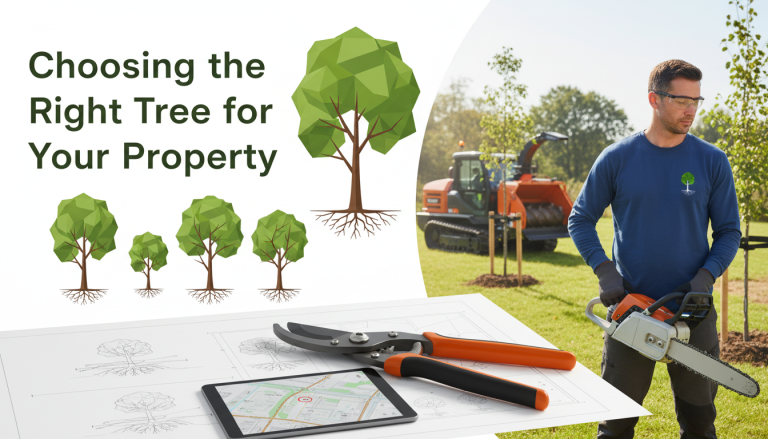
The Approved Toolset for Homeowners
To handle small jobs effectively, you need specific equipment. Forget the rusty saw in the garage. Clean cuts prevent disease.
1. Bypass Pruners: These act like scissors. Use them for living stems up to 2 cm thick. They make a clean slice that heals quickly.
2. Loppers: These have long handles for leverage. They tackle branches up to 5 cm thick. Look for ratcheting mechanisms to reduce hand strain.
3. Pruning Saw: A curved blade with razor-sharp teeth cuts on the pull stroke. This handles branches up to 10 cm thick.
4. Pole Saw: This allows you to reach higher branches while keeping your feet firmly on the grass. Never use these near power lines.
The Science of the Cut
When you prune a tree, you inflict a wound. Trees do not “heal” in the human sense; they seal. They grow callus tissue over the cut to protect the inner wood from decay. You must place your cut just outside the “branch collar” (the swollen area where the branch meets the trunk).
If you cut flush against the trunk, you remove the collar. The tree cannot seal the wound. Rot enters the main trunk. If you leave a long stub, the stub rots and acts as a conduit for disease to enter the heartwood. Precision matters.
When to Call a Professional: The Technical Breakdown
The moment your feet leave the ground, the risk profile changes exponentially. Professional arborists use specialized gear and techniques that homeowners cannot replicate with a ladder and a rope.
Gravity and Rigging Physics
Consider a sugar maple branch that is 20 cm in diameter and 3 metres long. This piece of wood weighs hundreds of pounds. When you cut it, gravity takes over immediately. If you stand on a ladder, that branch can swing back, hit the ladder, or crush whatever sits below it.
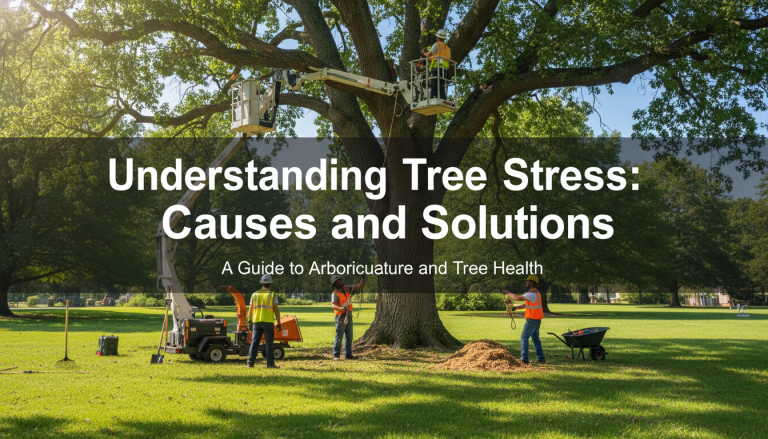
Professionals use rigging. They set up friction blocks and pulleys high in the tree. A ground crew member holds a rope wrapped around a lowering device (a port-a-wrap). The climber cuts the branch, but it does not fall. The rope catches it. The ground crew lowers it gently, avoiding your fence, your roof, and the climber.
Tension and Compression wood
Trees under stress contain stored energy. A storm-damaged tree leaning on a fence acts like a loaded spring. The wood fibres on one side experience extreme tension, while the other side faces compression.
If you cut into a tension side incorrectly, the tree can snap violently. This phenomenon, known as a “barber chair,” causes the tree to split vertically faster than you can react. The splitting wood can strike the cutter with fatal force. Arborists calculate these forces before they start the chainsaw. They use specific cutting techniques (like the bore cut) to release this energy safely.
The Danger of Ladders
Never use a ladder for tree work. Trees are dynamic structures. They sway. The ground beneath them is often uneven. If you lean a ladder against a tree and then cut a limb, the tree’s weight shifts. The trunk shakes. The ladder loses contact. Arborists use climbing saddles and ropes. They tie into the tree itself. If they slip, they swing on a rope rather than falling to the ground.
The Financial Calculation: Cost vs. Value
Homeowners often assume DIY is cheaper. When you factor in the hidden costs and risks, the math changes.
The Hidden Costs of DIY
* Equipment Rental: renting a powerful chainsaw, a pole saw, and a wood chipper for a weekend costs hundreds of dollars.
* Disposal Fees: In most Canadian municipalities, you cannot put large logs out for curbside pickup. You must pay tipping fees at the local dump. You also need a truck or trailer to get the wood there.
* Stump Removal: Cutting the tree is only half the job. Renting a stump grinder adds another significant cost and requires heavy lifting.
* Damage Repair: If a limb falls on your eavestroughs or cracks your patio stones, your “savings” evaporate instantly.
The Value of Professional Assessment
A certified arborist does not just cut trees. They assess health. You might think a tree needs removal, but an expert might identify a treatable condition. Saving a mature tree increases your property value. Mature trees reduce cooling costs in summer and provide windbreaks in winter. Removing a tree unnecessarily destroys that equity.
Furthermore, professionals carry liability insurance. If they drop a tree on your neighbour’s garage, their insurance covers it. If you drop a tree on your neighbour’s garage, you face a lawsuit and a potential claim denial from your own provider if they deem you were negligent.
Environmental and Safety Benefits
Beyond the immediate cut, professional care protects the broader ecosystem of your yard and neighbourhood.
Disease Control
Canada faces several serious tree threats, such as Dutch Elm Disease, Oak Wilt, and the Emerald Ash Borer. Improper pruning spreads these pathogens. For example, pruning an elm tree in the summer releases sap that attracts the beetles carrying the fungus. A professional knows the biological calendar. They know exactly when to prune specific species to prevent infection.
Wildlife Protection
The Migratory Birds Convention Act protects nesting birds across Canada. If you cut down a tree with an active nest during breeding season, you break federal law. Arborists inspect the canopy for nests and wildlife before work begins. They know how to spot cavities used by owls or bats and can recommend timing your removal to avoid disturbing local fauna.
Soil Compaction
Heavy DIY efforts often involve driving trucks onto the lawn or dropping heavy logs repeatedly. This compacts the soil, crushing the fine root hairs of surrounding vegetation. Professionals use matting to protect your lawn and techniques to lower wood gently, preserving the soil structure for future planting.
Maintenance and Practical Tips for Homeowners
While removal and heavy pruning belong to the pros, you play the most critical role in your tree’s daily health. Here is what you should focus on:
1. Mulch Correctly: Apply a layer of wood chips 5 to 10 cm deep around the base of the tree. Do not pile it against the trunk (volcano mulching). Keep the mulch 5 cm away from the bark to prevent rot. This retains moisture and regulates soil temperature.
2. Water Deeply: During Canadian summer droughts, trees suffer. Water slow and deep. A trickle from a hose for an hour helps more than a quick spray.
3. Inspect After Storms: Walk around your property after high winds or ice storms. Look for hanging branches, cracks in the soil (indicating root heave), or new leans.
4. Protect the Root Zone: Avoid parking cars or stacking construction materials under the canopy of your trees. Root damage takes years to show, but it is often fatal.
Conclusion: Make the Smart Call
Your trees represent a living asset on your property. They require respect, knowledge, and the right equipment. While trimming a small hedge or pruning a young apple tree makes for a great afternoon in the garden, heavy removals and high-canopy work demand expertise. Gravity does not forgive mistakes, and the cost of a professional service pales in comparison to the cost of an injury or property damage.
If you have a tree that looks too big to handle, it is.
Ready to get your trees assessed or removed safely? Stop guessing and start solving the problem. Browse our directory today to find a certified, insured tree service contractor near you.