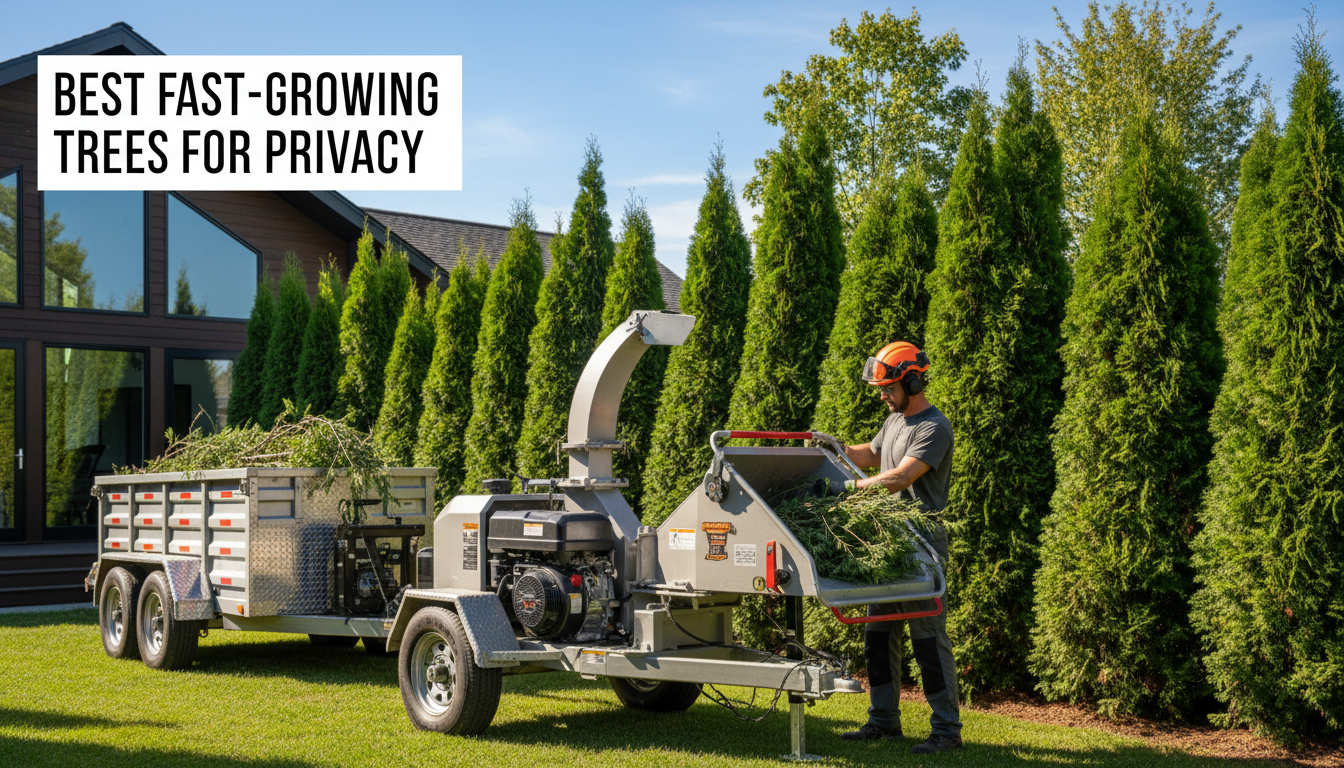
Best Fast-Growing Trees for Privacy
Best Fast-Growing Trees for Privacy in Canada
Do you feel like you are living in a fishbowl every time you step into your backyard? It is a common frustration for Canadian homeowners. As neighbourhoods densify and lot sizes shrink, privacy becomes a luxury. While fences offer an immediate boundary, they often come with height restrictions and lack the aesthetic appeal of lush greenery. This brings us to the ultimate question: What are the best fast-growing trees for privacy that can survive and thrive in the Canadian climate?
Planting a living wall is a long-term investment in your property value and your peace of mind. However, choosing the wrong tree can lead to invasive roots, winter die-back, or unmanageable maintenance. This guide covers the top fast-growing species specifically suited for Canadian hardiness zones, ensuring you get the screening you need without the headaches.
Quick Summary: Top Privacy Trees for Canadian Yards
If you want the answers fast, here is a snapshot of the best performers for creating natural screens in Canada:
* Emerald Cedar: The gold standard for neat, dense hedges (Zones 3-8).
* Swedish Columnar Aspen: Perfect for narrow side yards (Zones 2-9).
* Hybrid Poplar: The fastest grower for large properties (Zones 3-9).
* White Spruce: Best for windbreaks and year-round density (Zones 2-7).
* Paper Birch: Offers aesthetic privacy with peeling bark and leaves (Zones 2-7).
* Techny Arborvitae: A hardier, broader alternative to the Emerald Cedar (Zones 3-8).
Why Choose a Living Fence?
Before we dive into the specific species, it is worth noting why trees often outperform man-made structures. Fences are static. They deteriorate over time and often cap out at six feet due to municipal bylaws. Trees, conversely, grow stronger with age. They can easily surpass typical fence heights to block sightlines from second-story windows next door. Furthermore, trees act as sound buffers, dust filters, and windbreaks. They transform a simple property line into a functioning ecosystem.
Top Fast-Growing Trees for Privacy in Canada
When selecting a tree, you must balance speed with longevity and hardiness. The following list focuses on trees that handle Canadian winters while delivering rapid vertical growth.
1. Emerald Cedar (Thuja occidentalis ‘Smaragd’)
This is arguably the most popular privacy tree in Canada for good reason. The Emerald Cedar offers a classic, manicured look that requires very little pruning to maintain its shape. It grows in a narrow pyramidal form, making it ideal for creating a solid green wall.
* Hardiness Zone: 3 to 8
* Growth Rate: Moderate to Fast (30 cm per year once established)
* Mature Size: 4 to 5 metres tall, 1 to 1.5 metres wide
* Sun Exposure: Full sun to partial shade
Why it works:
Emerald Cedars hold their bright green colour throughout the winter, unlike other evergreens that may bronze. Because they stay relatively narrow, you can plant them closer together (roughly 60 to 90 cm apart) to form a seamless hedge. They are perfect for suburban backyards where space is at a premium.
Expert Tip:
These trees are thirsty when young. You must install a soaker hose along the base of the hedge for the first two years. Without consistent moisture, the insides of the tree will brown and die out, and that foliage does not grow back.
2. Swedish Columnar Aspen (Populus tremula ‘Erecta’)
If you have a narrow side yard between you and your neighbour, the Swedish Columnar Aspen is your solution. These deciduous trees grow straight up like a pillar, taking up very little horizontal ground space.
* Hardiness Zone: 2 to 9
* Growth Rate: Very Fast (Over 1 metre per year)
* Mature Size: 12 to 15 metres tall, only 1 to 2 metres wide
* Sun Exposure: Full sun
Why it works:
This tree is incredibly hardy and tolerates a range of soil conditions, including the heavy clay often found in new subdivisions. While they lose their leaves in winter, the branch structure is dense enough to provide a visual screen even when bare. In autumn, the leaves turn a stunning rusty-orange red.
Expert Tip:
Aspens can sometimes send out suckers (shoots from the roots). While the Swedish variety is less prone to this than the native Trembling Aspen, you should still monitor the base of the tree and prune away any shoots that appear in your lawn.
3. Hybrid Poplar (Populus deltoides x Populus nigra)
When you need privacy immediately, the Hybrid Poplar is the speed demon of the tree world. It is capable of rocketing up nearly two metres in a single growing season under optimal conditions.
* Hardiness Zone: 3 to 9
* Growth Rate: Extremely Fast (1.5 to 2.5 metres per year)
* Mature Size: 15 to 25 metres tall, 10+ metres wide
* Sun Exposure: Full sun
Why it works:
If you have a large property or an acreage and need to block a highway view or a new development quickly, this is the tree. It creates a massive shade canopy and visual block in record time.
Expert Tip:
Speed comes at a cost. Hybrid Poplars have aggressive root systems and weaker wood. Do not plant these close to your foundation, septic bed, or driveway. They are best reserved for the perimeter of larger lots. They also have a shorter lifespan (around 30-40 years), so consider planting slower-growing spruce trees in between them for a long-term succession plan.
4. White Spruce (Picea glauca)
For a truly Canadian solution, look to the native White Spruce. While slightly slower than the poplar, it is faster than many other conifers and provides an impenetrable wall of needles.
* Hardiness Zone: 2 to 7
* Growth Rate: Moderate (30 to 60 cm per year)
* Mature Size: 15 to 25 metres tall, 5 to 7 metres wide
* Sun Exposure: Full sun
Why it works:
This tree is a tank. It survives severe cold, wind, and heavy snow loads that might snap more brittle trees. It is the ultimate windbreak tree. Once established, a row of White Spruce blocks noise, wind, and nosy neighbours completely.
Expert Tip:
Give them space. Homeowners often make the mistake of planting spruce trees too close together. Space them at least 4 to 5 metres apart. They look sparse at first, but they will eventually touch. Crowding them leads to disease and dead branches.
5. Paper Birch (Betula papyrifera)
If you prefer an aesthetic, airy look over a solid wall, the Paper Birch is a beautiful native option. Its peeling white bark provides visual interest and screening even in the depths of winter.
* Hardiness Zone: 2 to 7
* Growth Rate: Fast (45 to 60 cm per year)
* Mature Size: 15 to 20 metres tall, variable width
* Sun Exposure: Full sun to partial shade
Why it works:
Birch trees usually grow in clumps or multi-stemmed forms. This growth habit creates a wider screen at eye level quickly. They cast dappled shade rather than deep darkness, which allows you to grow grass or gardens underneath them.
Expert Tip:
The Bronze Birch Borer is a pest that targets stressed trees. Keep the roots cool and moist by applying a thick layer of mulch around the base. A healthy, well-watered Birch is much more resistant to pests.
Environmental and Safety Benefits
Planting these trees does more than stop prying eyes. It contributes to the health of your local environment and the safety of your home.
Wind Reduction and Heating Bills
In Canada, winter winds strip heat from your home. A strategically planted row of evergreens (like the White Spruce or Cedar) on the north or west side of your property acts as a windbreak. This can reduce wind speed hitting your home, potentially lowering heating costs by 10% to 30%.
Noise Pollution Control
Leaves and needles absorb and deflect sound waves. If you live near a busy street, a thick planting of trees serves as a biological sound barrier. While it will not silence a highway, it changes the frequency of the noise, making it less jarring to the human ear.
Snow Control
A living fence changes how snow drifts across your yard. By reducing wind speed, trees cause snow to drop shortly after the barrier rather than drifting against your garage door or driveway. This is particularly useful for rural driveways.
Maintenance Tips for Rapid Growth
You cannot simply plant a tree and walk away if you want maximum growth speed. To get these trees to perform at their peak, you need to follow a few maintenance rules.
1. Water is Fuel
Fast growth requires immense amounts of water. For the first two years, you must water your new trees deeply once a week (or more frequently during heatwaves). A shallow sprinkle with a hose is insufficient. You need the water to penetrate deep into the soil to encourage deep rooting. Use a drip irrigation system or soaker hoses for the best results.
2. Mulch Matters
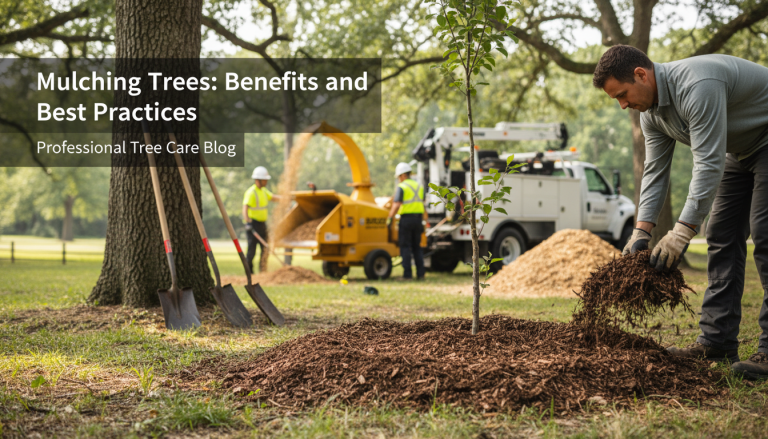
Grass is the enemy of young trees. It competes aggressively for water and nutrients. Remove a circle of grass at least one metre in diameter around the trunk and apply 5 to 10 cm of wood chip mulch. This retains moisture and keeps the soil temperature stable. Ensure the mulch does not touch the trunk directly, as this can cause rot.
3. Structural Pruning
While you want density, you also want structural integrity. For deciduous trees like the Aspen or Birch, prune away broken or crossing branches in late winter while the tree is dormant. For Cedars, a light shearing in early summer promotes denser foliage. Never prune off the top (leader) of a tree until it reaches your desired height.
4. Soil Quality
Before planting, get a rough idea of your soil type. Is it sandy? Clay? Adding organic matter (compost) to the planting area helps sandy soil hold water and helps clay soil drain. However, do not amend only the hole itself. This creates a “pot” effect where roots refuse to leave the nice soil. It is better to amend a larger area or top-dress with compost annually.
Solving the Privacy Puzzle
Creating a private sanctuary in your backyard is one of the most rewarding home improvement projects you can undertake. Whether you choose the architectural elegance of the Swedish Aspen or the rugged durability of the White Spruce, the key is to start now. The best time to plant a tree was twenty years ago; the second-best time is today.
However, large-scale planting projects or managing mature trees can be physically demanding and technically complex. Ensuring you choose the right species for your specific soil type and sunlight conditions makes the difference between a thriving green wall and a dead stick in the ground.
If you need assistance with planting, pruning, or assessing the health of your current trees, do not guess. Professional help ensures your investment grows safely and rapidly.
Ready to transform your yard?
[Browse our directory to find a professional tree service contractor near you](https://www.example.com/tree-service-directory) and get started on your privacy project today.