
How to Protect Trees from Ice and Snow Damage
Is Your Landscape Ready for the Next Canadian Ice Storm?
Have you ever looked out your window after a heavy snowfall and noticed your birch or cedar bending dangerously low toward the ground? Winter in Canada brings breathtaking scenery, but it also delivers a brutal combination of heavy snow and freezing rain that tests the structural integrity of every tree on your property. The weight of ice can increase the load on a branch by up to 30 times. This immense pressure turns minor structural defects into catastrophic failures.
Protecting your trees requires more than just hoping for a mild winter. It demands proactive care, structural reinforcement, and knowing exactly when to intervene. This guide covers the essential strategies to safeguard your trees against the harsh reality of Canadian winters.
Quick Summary: Essential Winter Tree Protection
For those looking for immediate answers, here is the core strategy for preventing winter damage:
* Prune Before the Freeze: Remove dead, diseased, or crossing branches in late autumn to eliminate weak points.
* Install Cabling and Bracing: Reinforce multi-stemmed trees or large limbs with professional cabling systems to restrict movement during high winds and ice loads.
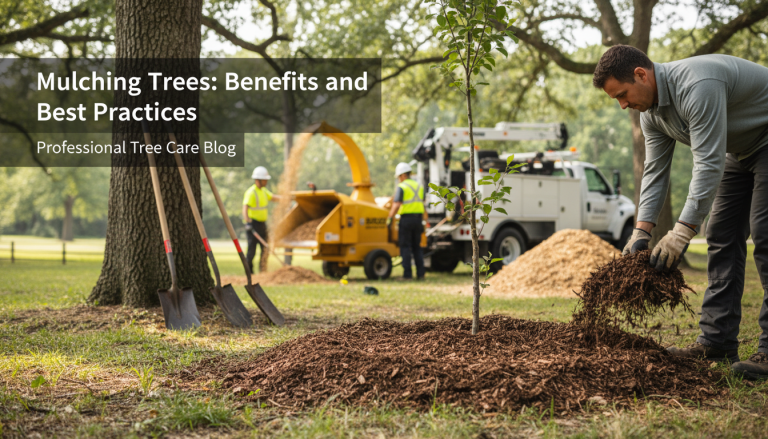
* Mulch the Root Zone: Apply a 2 to 4-inch layer of organic mulch to insulate roots against freeze-thaw cycles.
* Wrap Vulnerable Trunks: Use burlap or tree guards on young thin-barked trees to prevent sunscald and frost cracking.
* Gently Brush, Don’t Shake: Carefully sweep loose, fluffy snow off hedges. Never shake branches coated in ice, as they will snap.
* Hydrate in Late Fall: Ensure trees have sufficient moisture before the ground freezes solid.
—
Understanding the Threat: Ice vs. Snow
Not all winter precipitation affects your landscape equally. Understanding the difference between snow load and ice load helps you determine which trees need immediate attention.
Snow Load
Cold, powdery snow weighs relatively little. Most native Canadian trees, such as Spruces and Firs, have adapted flexible branches that shed this snow easily. However, wet snow (often occurring in late fall or early spring) poses a significant threat. Wet snow sticks to everything. It accumulates on the tips of long branches and creates a leverage effect that snaps wood instantly.
Ice Load
Freezing rain is the most destructive force for your canopy. As rain falls and freezes on impact, it coats every twig and needle in a heavy shell. Unlike snow, ice does not slide off. It bonds to the wood. When the wind picks up, an ice-coated tree loses its natural aerodynamics. Instead of swaying, it becomes a rigid sail. This rigidity causes the trunk or major limbs to shatter under the stress.
Professional Methods for Winter Protection
Arborists rely on specific tools and techniques to fortify trees against these elements. Implementing these methods before the first major storm hits ensures your property remains safe.
1. Structural Pruning
Pruning serves as the most effective preventative measure. You reduce the surface area that catches snow and wind by thinning the canopy. More importantly, you remove the liabilities.
How It Works:
An arborist targets “codominant stems.” These are two branches of equal size growing from the same point, forming a “V” shape. This union often contains included bark, which prevents strong wood attachment. Under the weight of ice, these V-shaped unions act like a wishbone and split down the middle.
The Benefit:
Removing or reducing one of these stems forces the tree to develop a stronger, single-leader structure. This structure distributes weight more evenly down the trunk rather than pulling the tree apart.
2. Cabling and Bracing
Sometimes, a tree provides too much value to the landscape to remove, even if it has structural flaws. In these cases, we use supplemental support systems.
The Technology:
* Static Cabling: We install high-strength steel cables between major limbs in the upper canopy. These cables limit how far the branches can move apart. When a snow load pulls a branch down, the cable transfers that weight to the other, stronger side of the tree.
* Dynamic Cabling: For trees that need to move to build strength, we use synthetic ropes that stretch slightly. This allows the tree to sway in the wind but catches it before it reaches a breaking point.
* Bracing rods: In cases where a trunk has already started to split, we insert steel rods directly through the union to bolt it together.
Technical Note:
This is not a DIY project. Incorrect tension on a cable causes the branch to snap at the attachment point. You need a certified professional to calculate the load and install the hardware correctly.
3. Burlap Barriers and Wrapping
Evergreens, specifically pyramidal cedars and junipers, suffer from “splaying.” Heavy snow accumulates in the center of the shrub, bending the outer branches until they permanently deform or break.
The Method:
Wrap the shrub in burlap or use heavy twine to spiral-tie the branches inward. This keeps the plant compact and prevents snow from entering the center of the canopy. The burlap also acts as a windbreak, reducing the risk of winter desiccation (where the wind dries out the foliage faster than the roots can absorb water).
What Not To Do: Common Mistakes That Kill Trees
Panic often leads homeowners to make decisions that cause more harm than the storm itself. Avoid these common errors when trying to help your trees.
Do Not Shake Ice-Coated Branches
When you see a branch bowing under ice, your instinct tells you to shake it free. Resist this urge. Wood loses flexibility when frozen. Shaking a limb creates rapid oscillation that the frozen fibers cannot absorb. The result: the branch snaps in your hand. Let the ice melt naturally.
Do Not knock Snow Off With Shovels
Smashing a shovel against a branch damages the bark. These wounds become entry points for decay fungi in the spring. If you must remove snow, use a soft-bristled broom and gently sweep upwards.
Avoid Salt Damage
Road salt (sodium chloride) destroys soil structure and burns tree roots. When shoveling your driveway, do not pile salty snow around the base of your trees. If your trees grow near a salted road, consider installing a physical burlap barrier to block salty spray from passing cars.
Environmental and Safety Benefits
Protecting your trees provides benefits that extend beyond aesthetics. A winter-ready landscape safeguards your home and the local ecosystem.
Protecting Property and People
Falling branches account for a significant portion of winter property damage in Canada. A large limb coated in ice becomes a heavy projectile capable of piercing roofs, shattering windshields, and taking down power lines. By proactively pruning and cabling, you mitigate the risk of liability and injury on your property.
Preserving Tree Health and Value
When a tree loses a major limb to ice, it loses a significant portion of its stored energy reserves. The large, jagged wound left behind rarely heals cleanly. It invites rot, carpenter ants, and disease. This accelerates the decline of the tree, eventually necessitating expensive removal. Preserving the structural integrity of your mature trees maintains your property value, as mature landscapes command higher market prices.
Maintenance and Practical Tips for Homeowners
While major structural work requires a professional, you can perform several maintenance tasks to prepare your landscape for winter.
Hydrate Before the Freeze
Winter droughts are real. If the autumn has been dry, water your trees deeply before the ground freezes. Moist soil holds heat better than dry soil, protecting the roots. Furthermore, fully hydrated cells in the tree needles resist winter burn more effectively.
Mulch Correctly
Apply organic mulch around the base of the tree in a donut shape. Keep the mulch pulled back 3 to 4 inches from the trunk itself. Piling mulch against the bark (volcano mulching) encourages rot and gives rodents a warm place to chew on the bark during winter.
Monitor During Thaws
Inspect your trees after a thaw. Look for new cracks in the trunk or hanging branches (widowmakers) that did not fall completely. These need immediate removal before the next freeze or windstorm brings them down.
Don’t Wait Until the Branch Breaks
Winter tree care is an investment in safety and longevity. While you can handle minor mulching and watering, assessing structural defects and installing cabling systems requires a trained eye and specialized gear. Climbing an icy ladder to trim a damaged branch is a recipe for disaster.
If you are unsure about the stability of a large maple looming over your roof, or if you need to brace a prized pine against the coming storms, connect with a certified expert. Qualified arborists have the training to identify weak points you might miss and the equipment to fix them safely.
Ready to winterize your landscape? Browse our directory to find a verified tree service contractor near you and schedule your safety inspection today.